
Introduction:
What began as an opportunity to build confidence, strengthen communication skills, and connect with others gradually evolved into an ongoing exploration of educational design, event experiences, and community engagement. Through my work as an Independent Beauty Consultant alongside Cait Studio, I documented research, developed instructional guides, designed promotional materials, and created experience-focused events intended to make beauty education feel more approachable and engaging. Rather than focusing solely on products, this project became an opportunity to explore how thoughtful design can simplify information, support learning, and create meaningful experiences. This ongoing case study reflects my process of research, experimentation, iteration, and using design to solve real problems while continuing to grow both personally and professionally.
Problem:
As someone who did not grow up with a strong understanding of makeup, skincare routines, or product application, I often found beauty information overwhelming, overly technical, or assumed prior knowledge. I recognized that others may experience similar uncertainty when trying to understand products, application order, undertones, or how to build routines confidently. This project explores how design can simplify complex beauty information through educational guides, visual systems, and experience-focused materials that make learning feel more approachable, engaging, and easier to apply in real-life settings. The goal became not only teaching myself, but creating tools that could help others feel more informed and confident as well.
The Challenge:
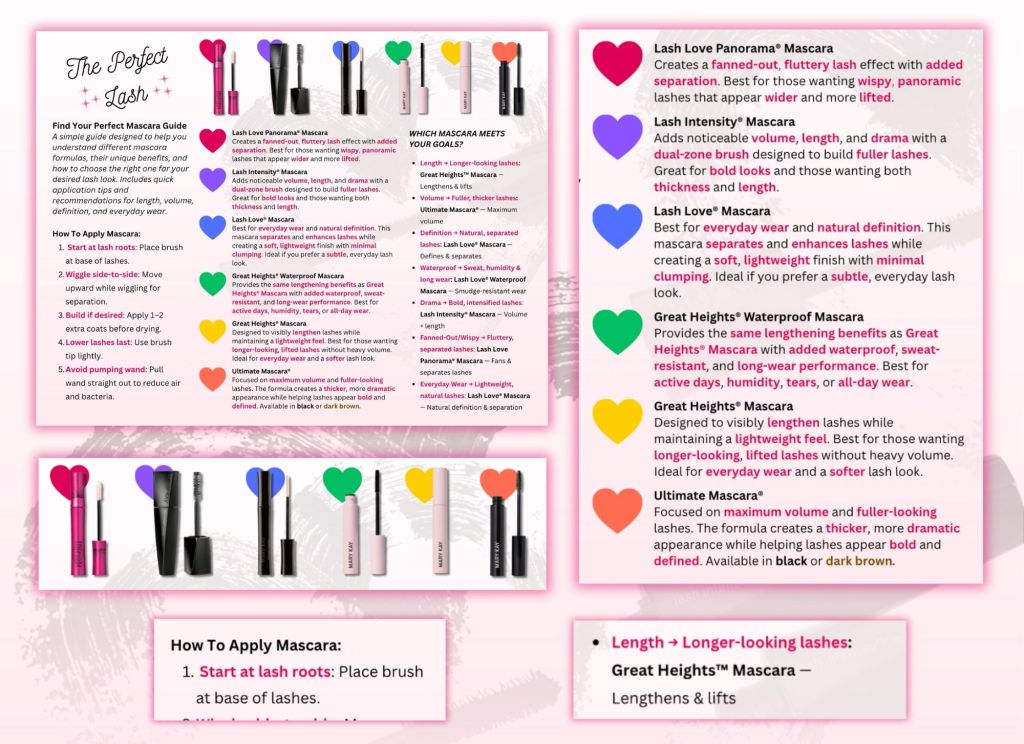
As someone with limited knowledge of makeup and skincare application, one of the biggest challenges was understanding how products work, how they should be applied, and how to confidently explain them to others. I found that much of the information available felt overwhelming, heavily text-based, or assumed prior experience. The challenge became teaching myself while transforming complex beauty education into clear, approachable, and visually engaging tools. Through design, I aimed to simplify routines, application techniques, and product knowledge into educational systems that support confidence, reduce confusion, and create more comfortable learning experiences for beginners.
Solution:
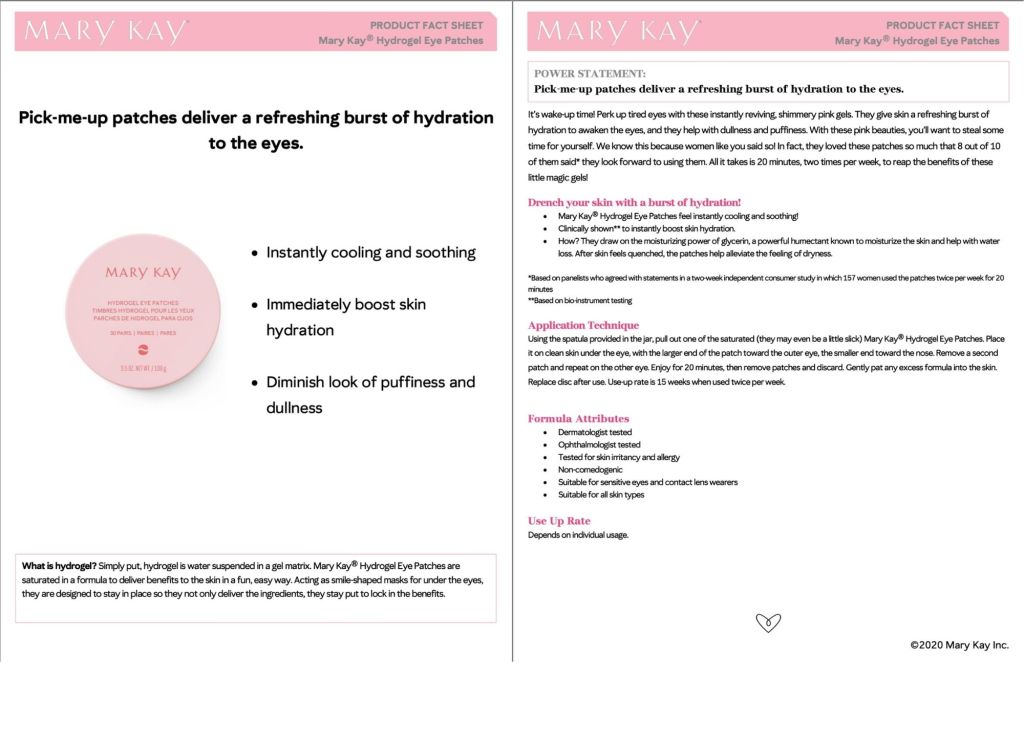
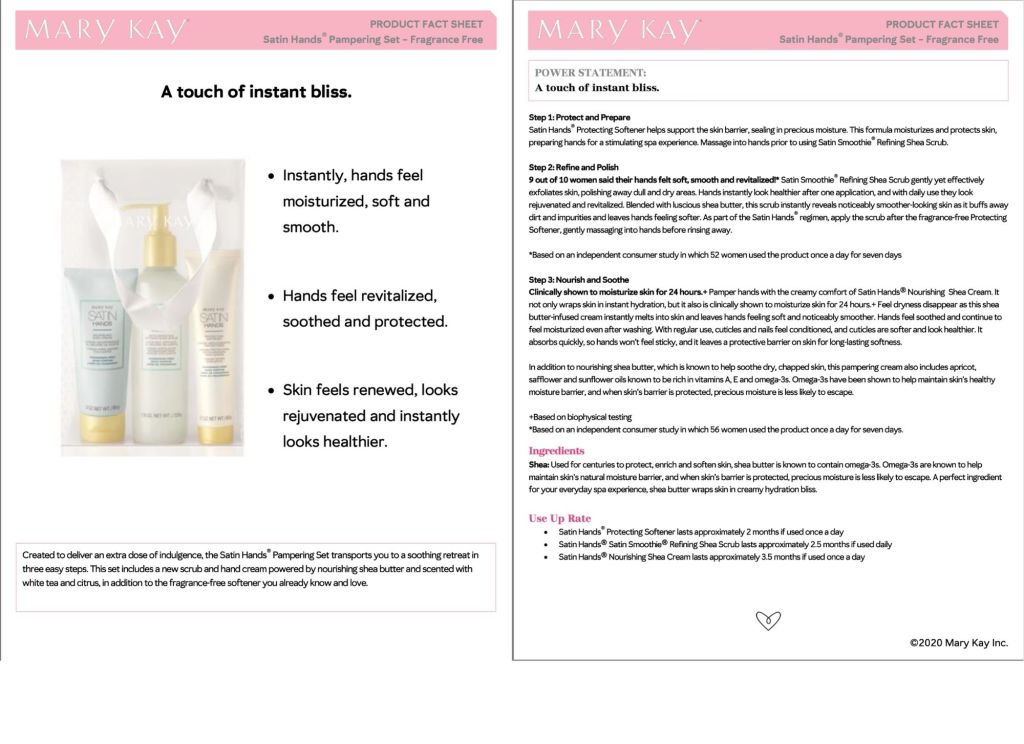
To address this challenge, I began documenting my learning process and transforming research, product information, and application techniques into clear visual systems that were easier to understand. Through instructional guides, educational layouts, event materials, and experience-focused tools, I used design to simplify complex beauty information into approachable, beginner-friendly experiences. Rather than focusing only on products, the solution centered on creating supportive resources that encourage confidence, reduce confusion, and help both myself and others learn makeup and skincare in a more engaging and accessible way.
The Opportunity:
What began as a personal learning experience created an opportunity to explore how design can make beauty education more approachable, engaging, and easier to understand for beginners. By combining research, visual communication, and real-world testing through events, I saw the potential to transform complex product information into educational systems that support confidence and encourage interaction. This project also became an opportunity to strengthen my skills in instructional design, art direction, event design, and user experience while building both Cait Studio and my confidence communicating with others.
Section Introductions:
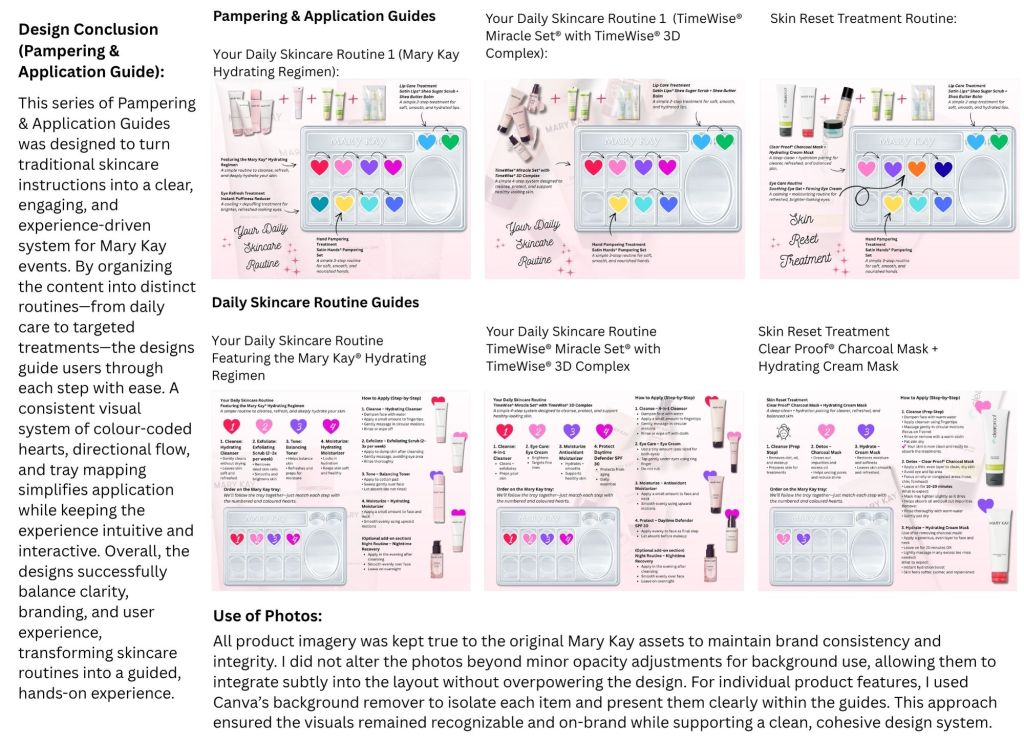
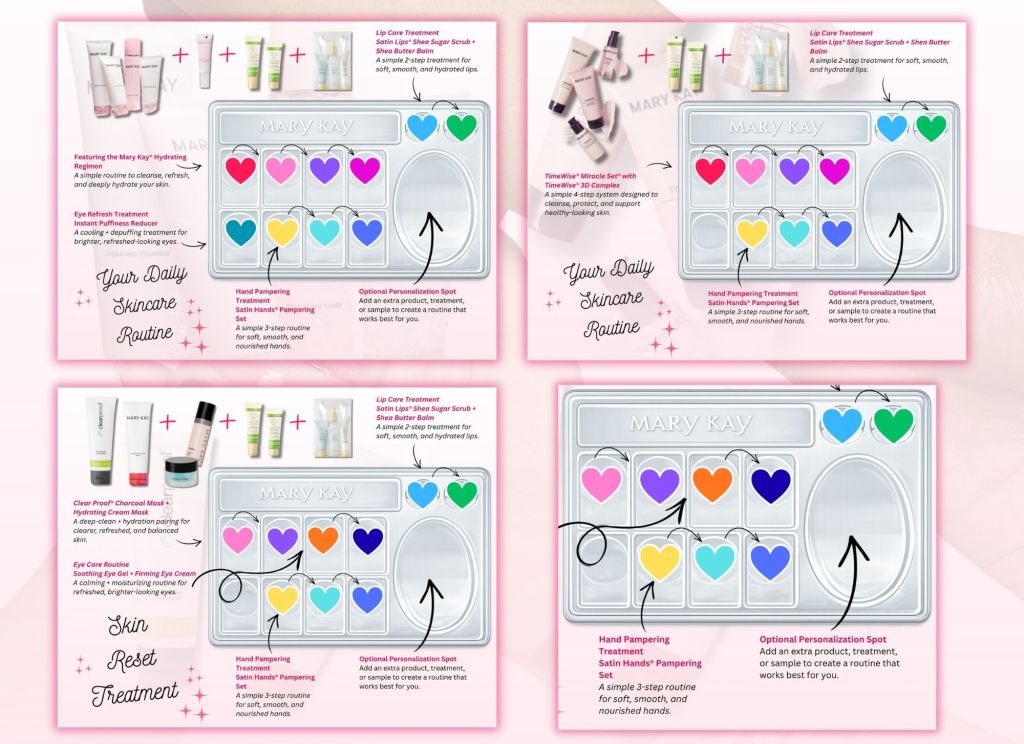
Pampering & Application Guides
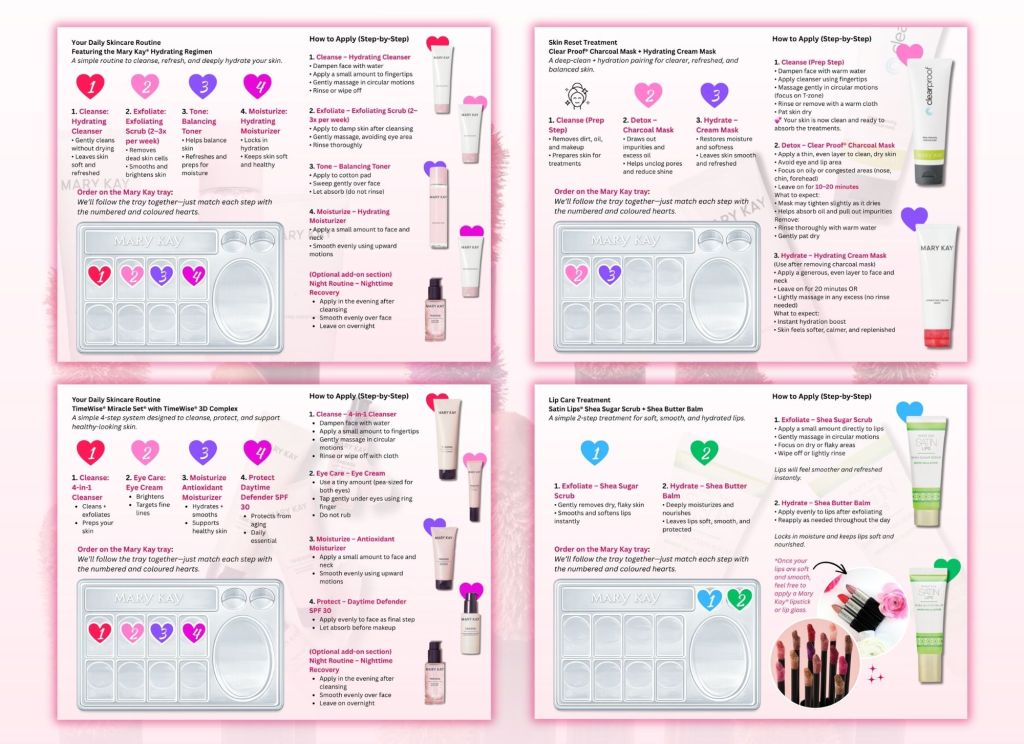
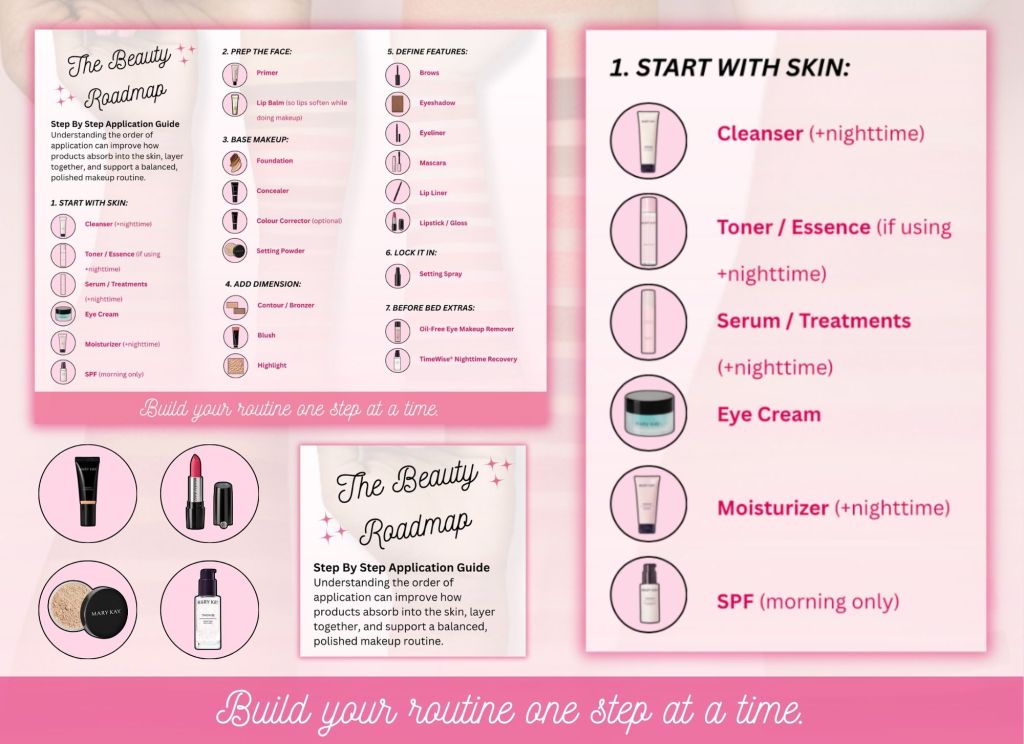
Educational guides designed to simplify skincare routines and product application through visual systems, tray mapping, and step-by-step instruction intended to create more approachable learning experiences.
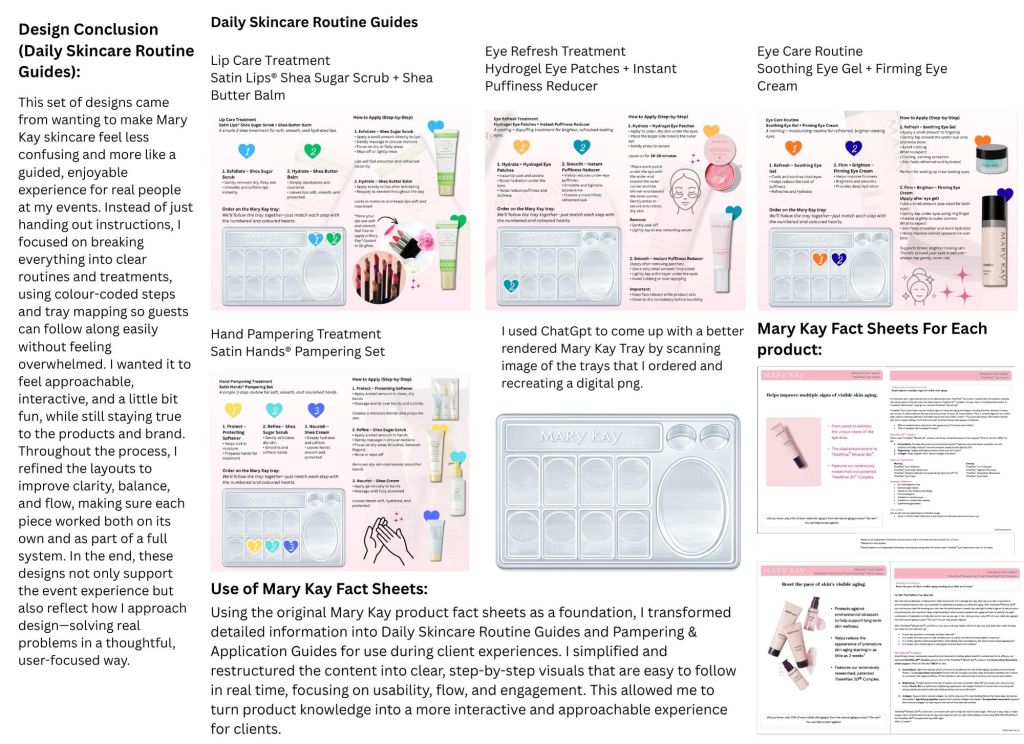
Daily Skincare Routine Guides
Instructional routine sheets created to transform product information into clear, beginner-friendly educational tools focused on confidence, consistency, and usability.
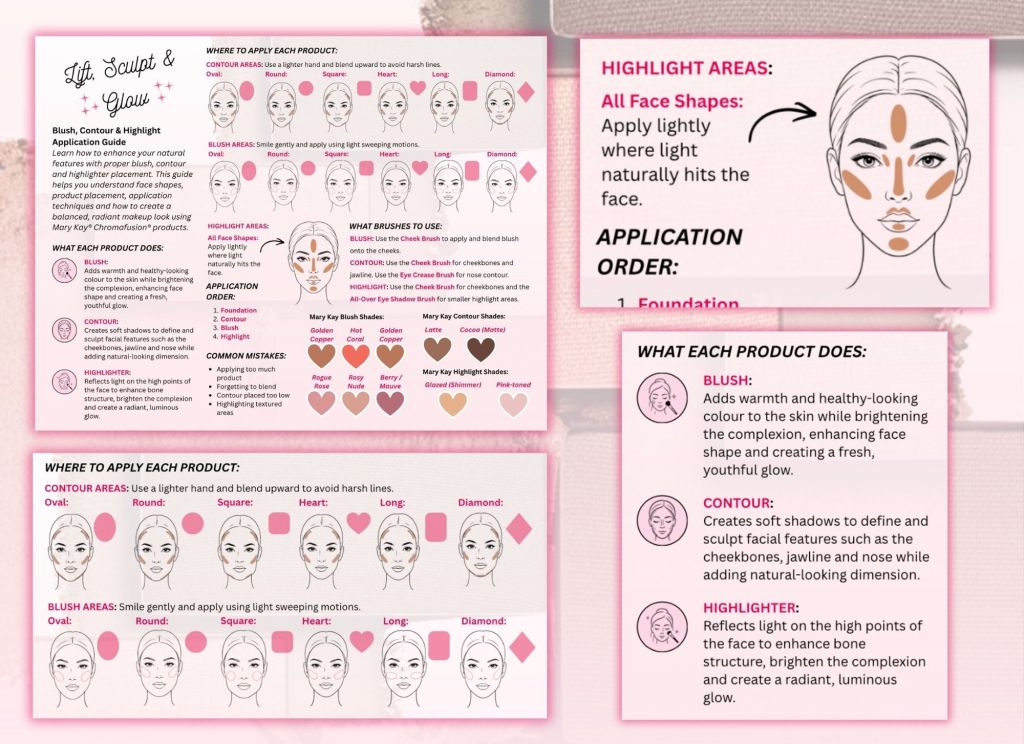
Makeup Application Guides
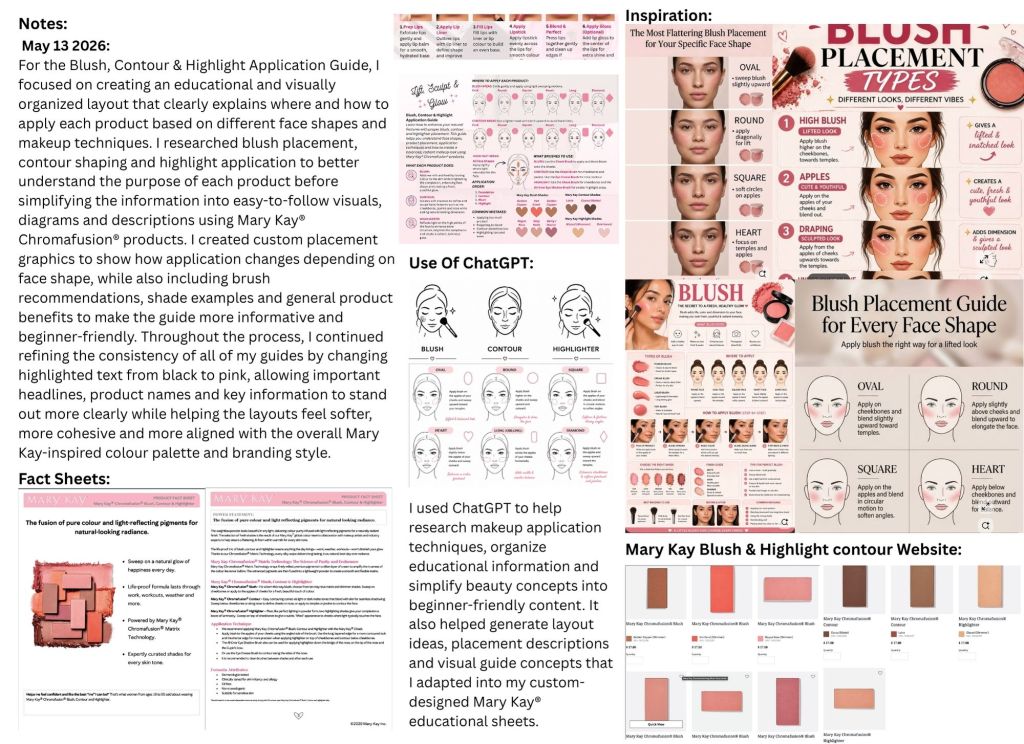
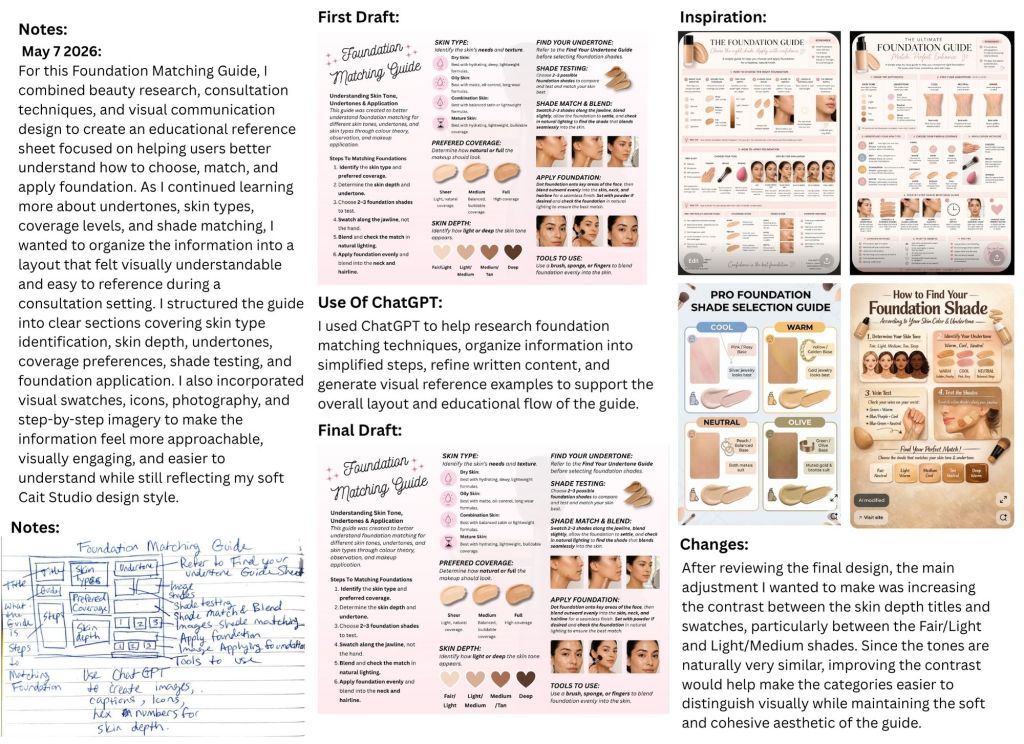
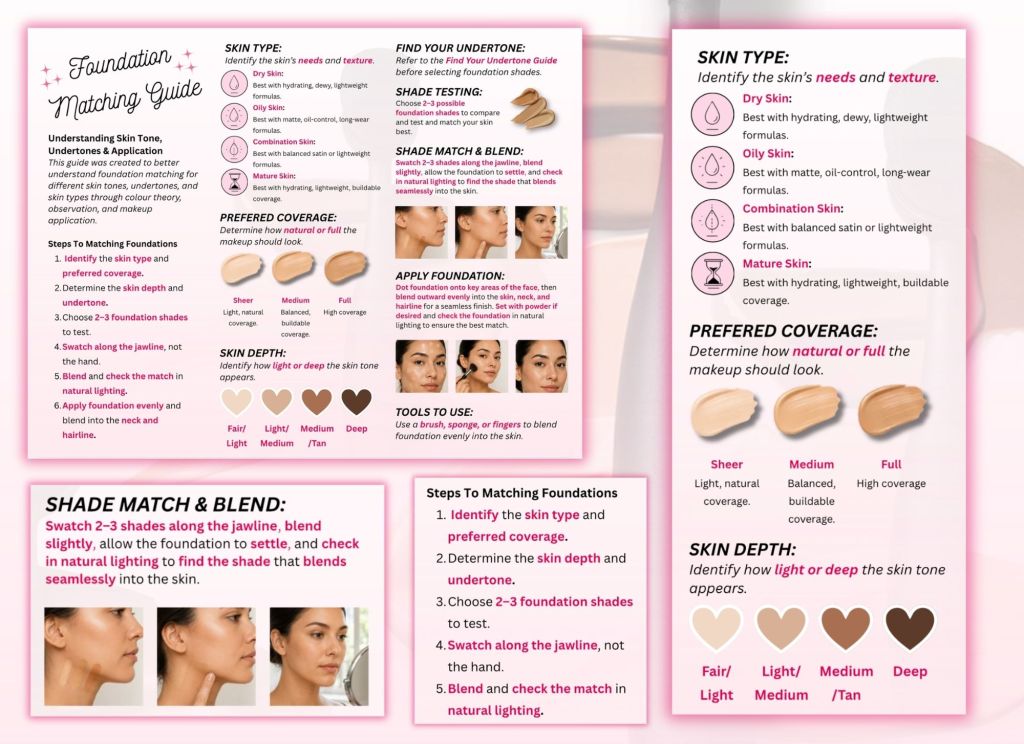
Visual educational resources developed to simplify makeup techniques, product selection, and application methods through organized layouts and approachable design.
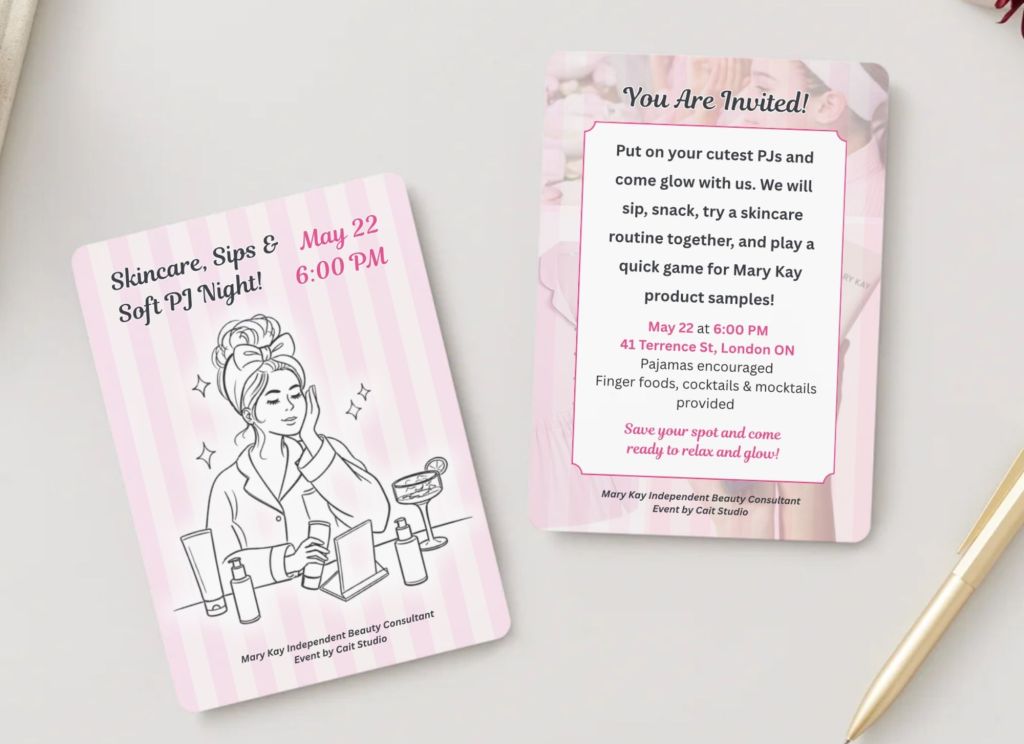
Event Invites & Promotional Materials
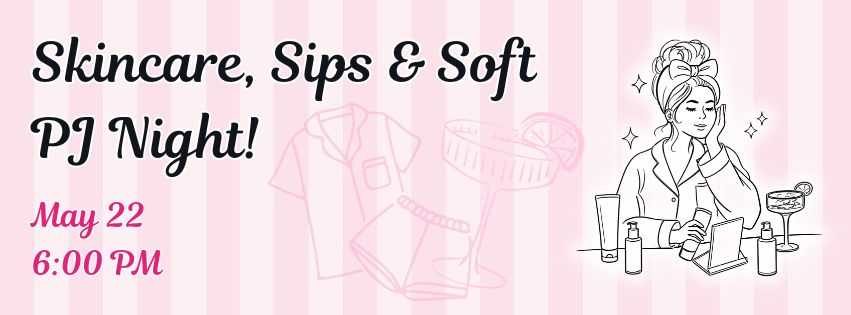
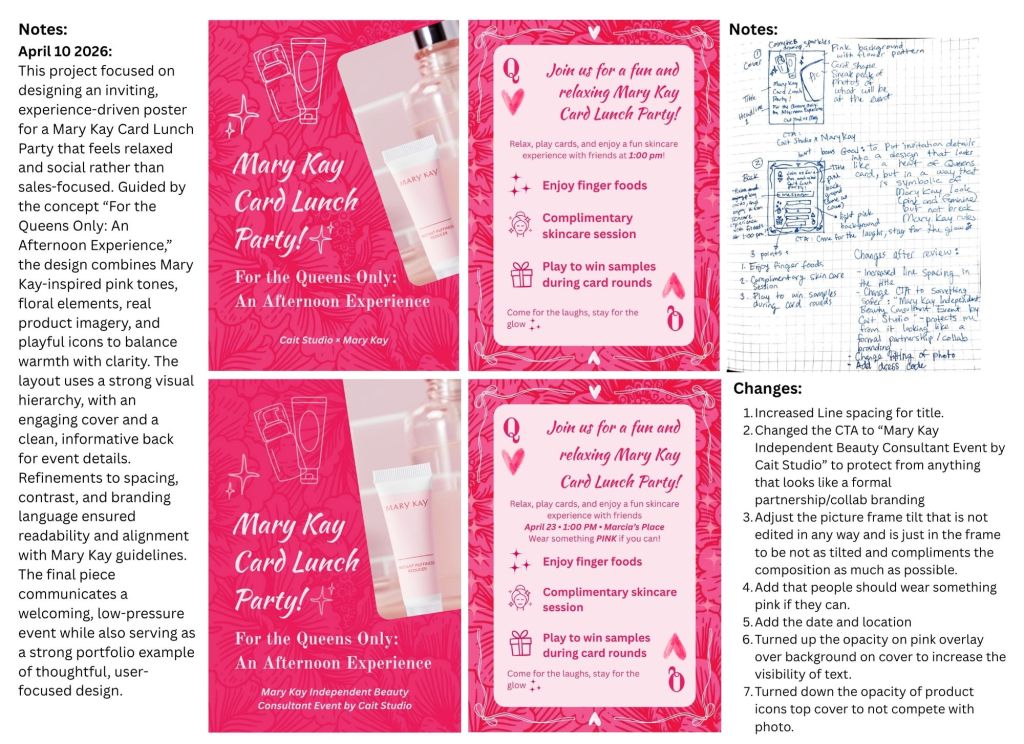
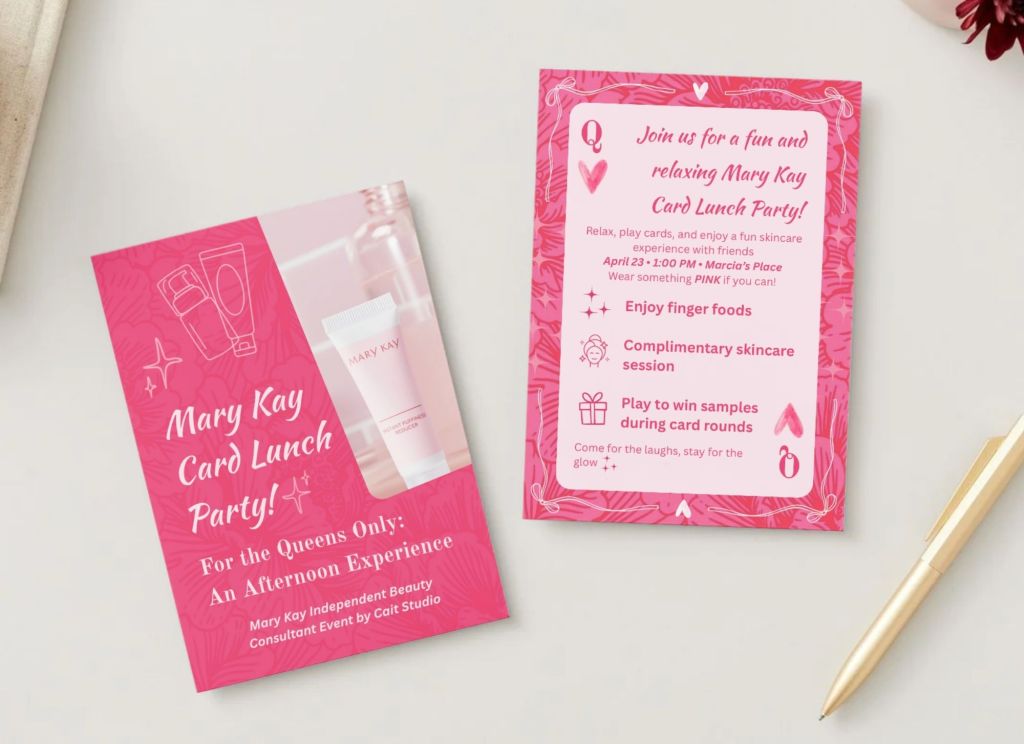
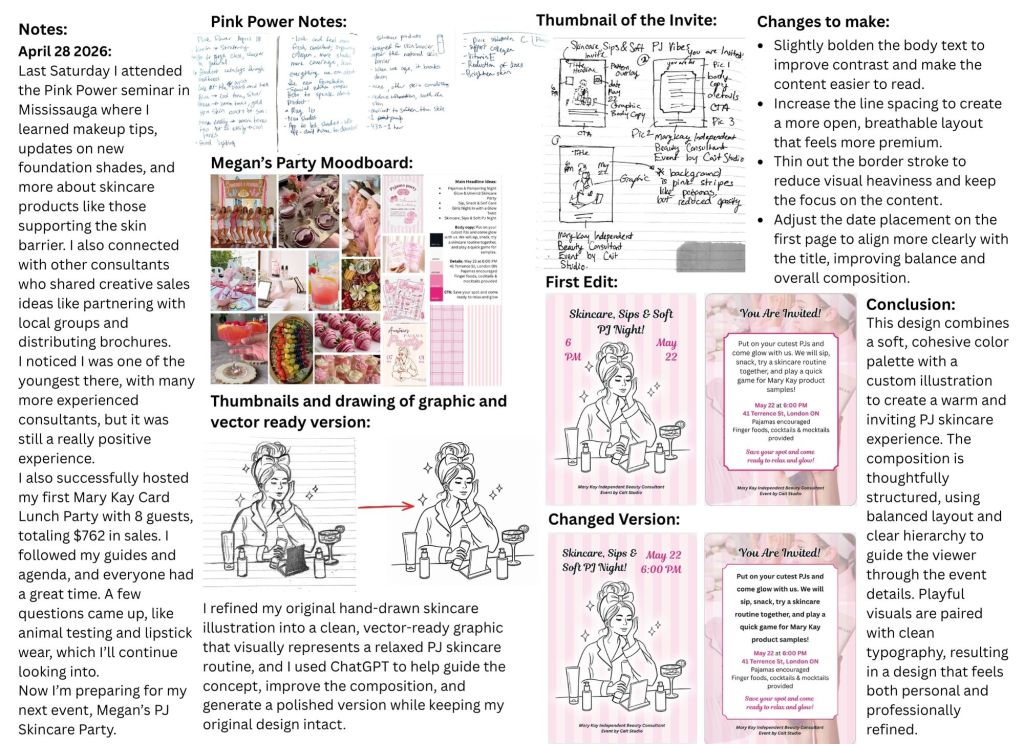
Invitations and event graphics designed to communicate experiences in a welcoming, engaging way while balancing information, branding, and visual hierarchy.
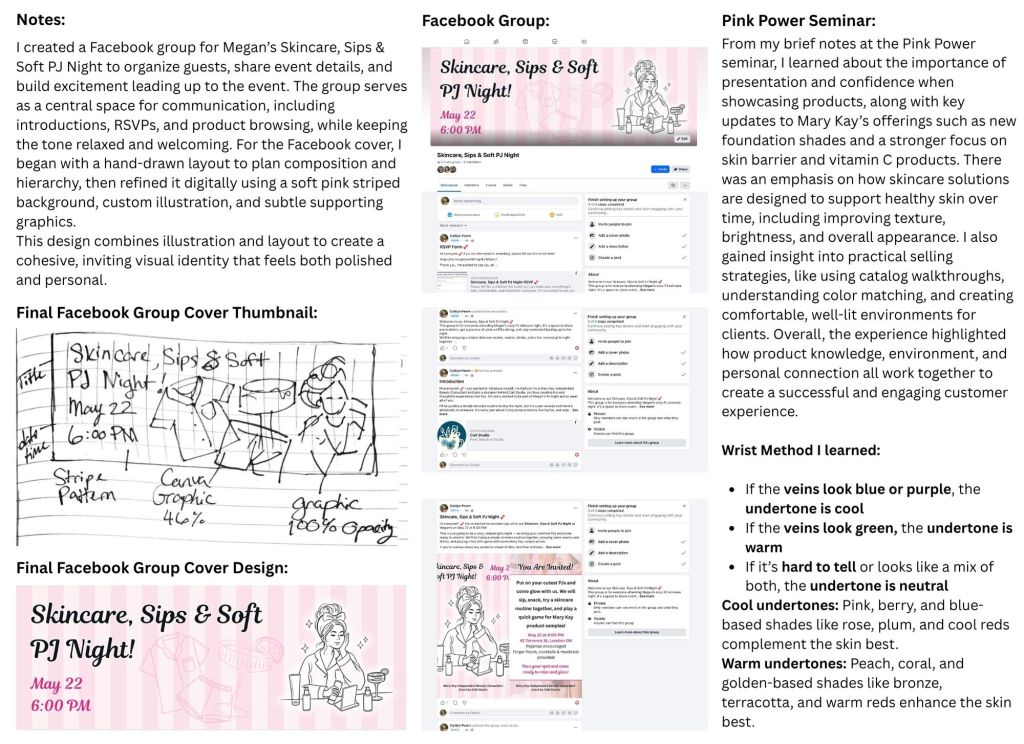
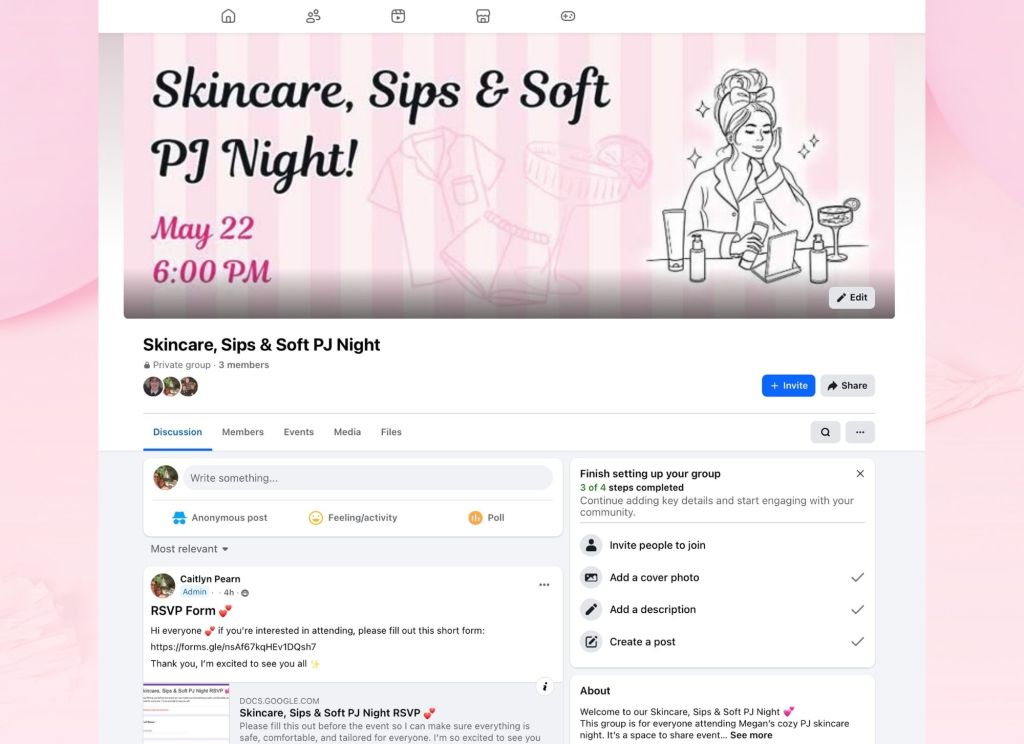
Facebook Group & Social Media Design
Digital graphics created to organize communication, build excitement around events, and maintain a cohesive visual identity across online spaces.
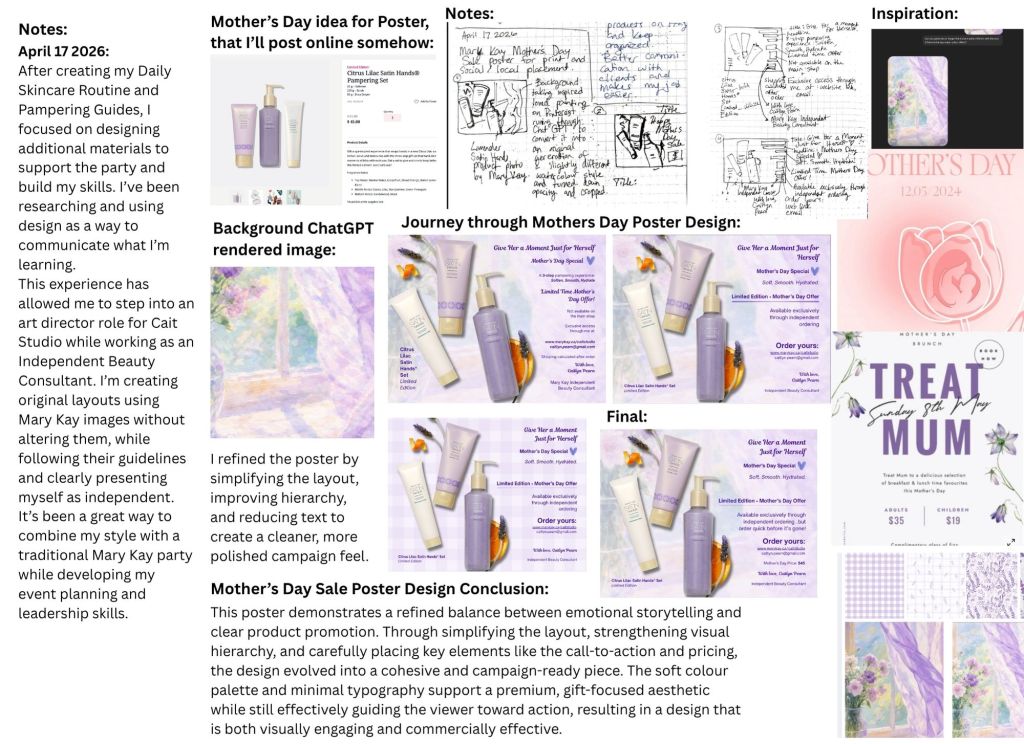
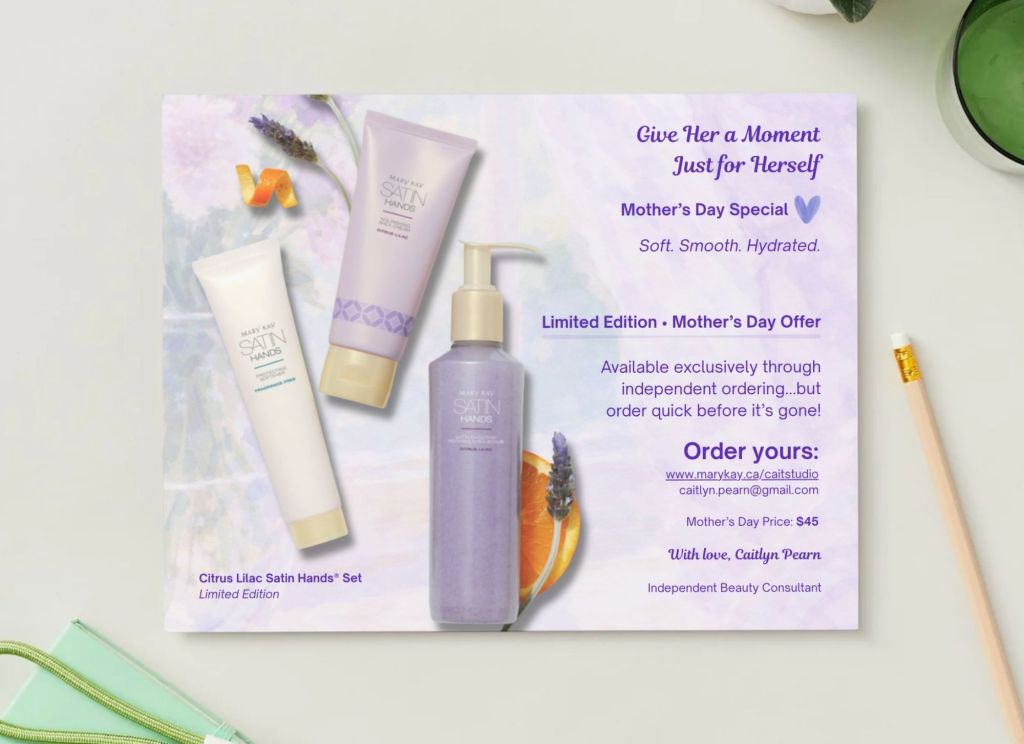
Mothers Day Campaign & Sales Posters
Promotional materials designed to combine campaign messaging, product awareness, and thoughtful visual hierarchy while creating approachable, gift-focused experiences.
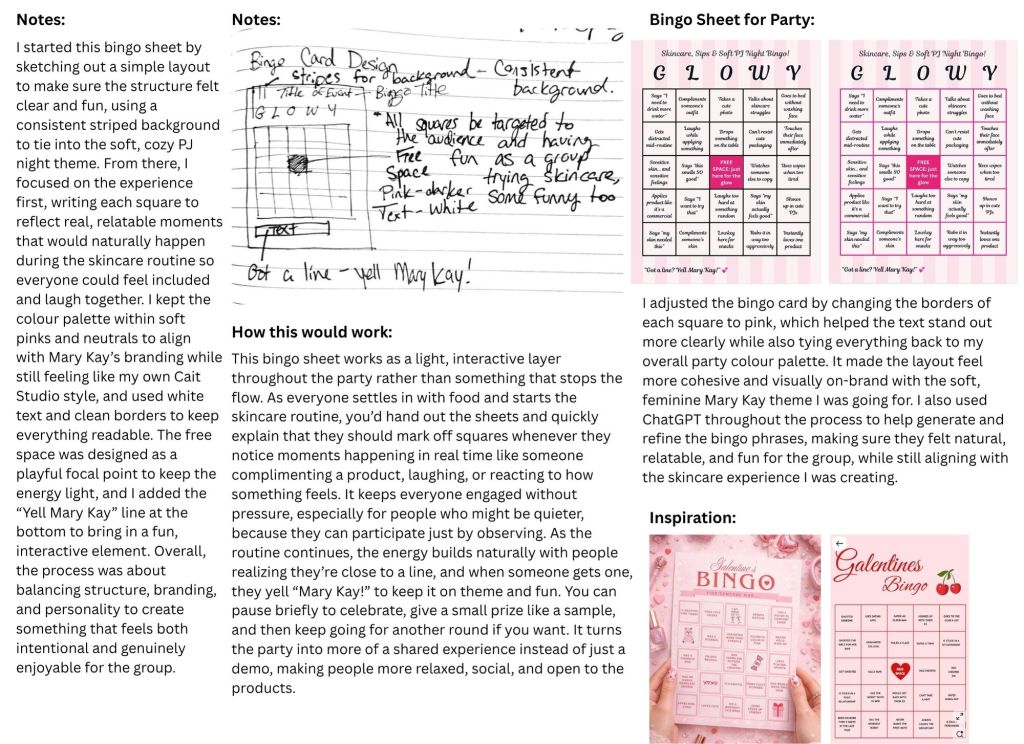
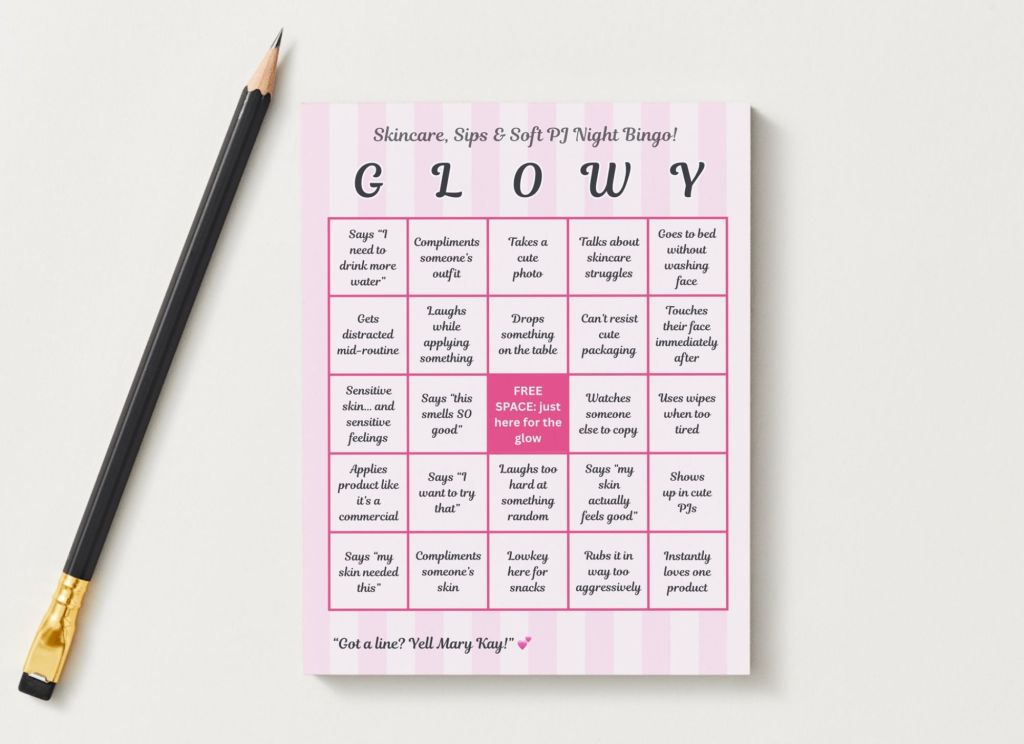
Bingo Sheets & Event Engagement Tools
Interactive materials created to encourage participation, increase engagement, and support relaxed, community-focused event experiences.
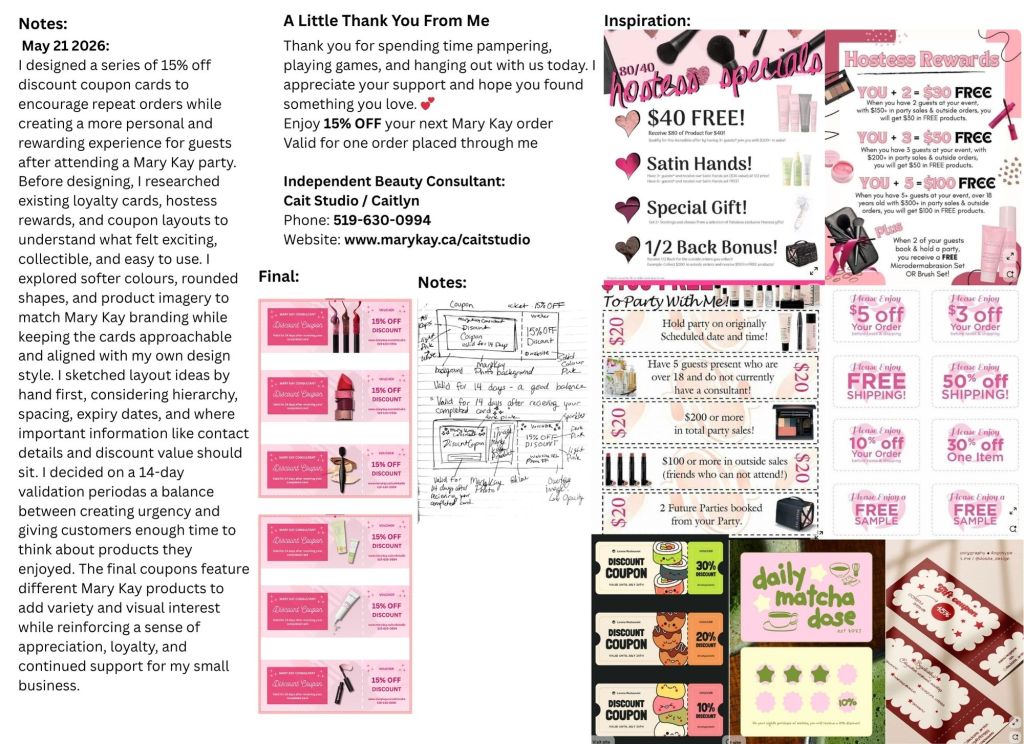
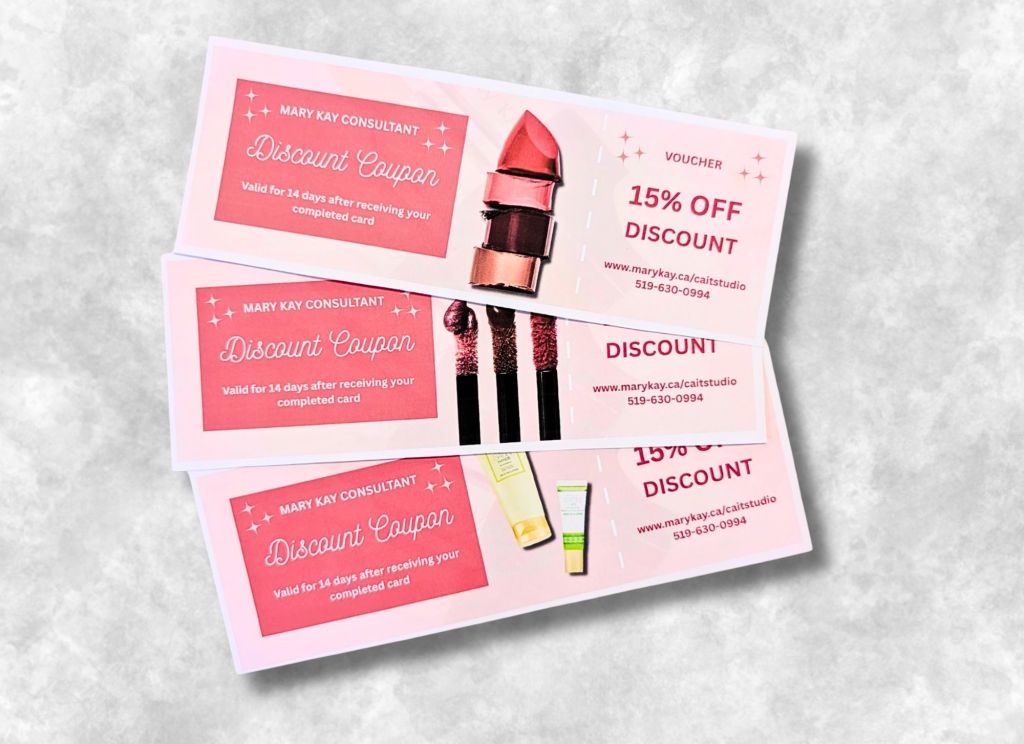
Mary Kay Vouchers
Reward systems and coupon designs developed to encourage repeat engagement while creating a more personalized and appreciation-focused customer experience.
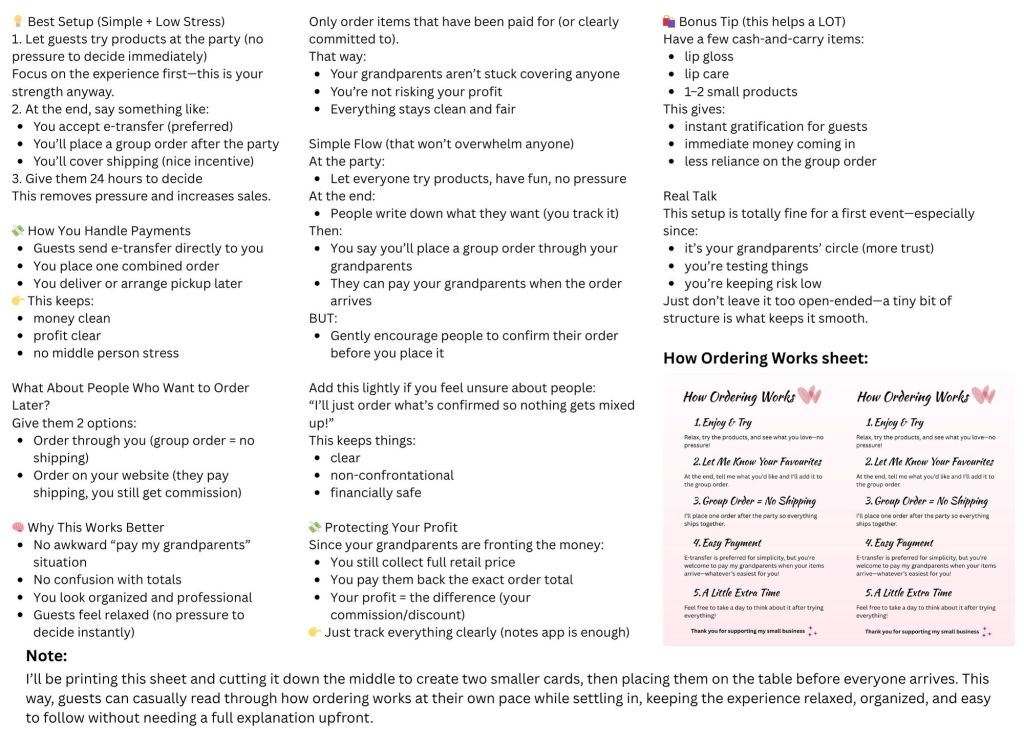
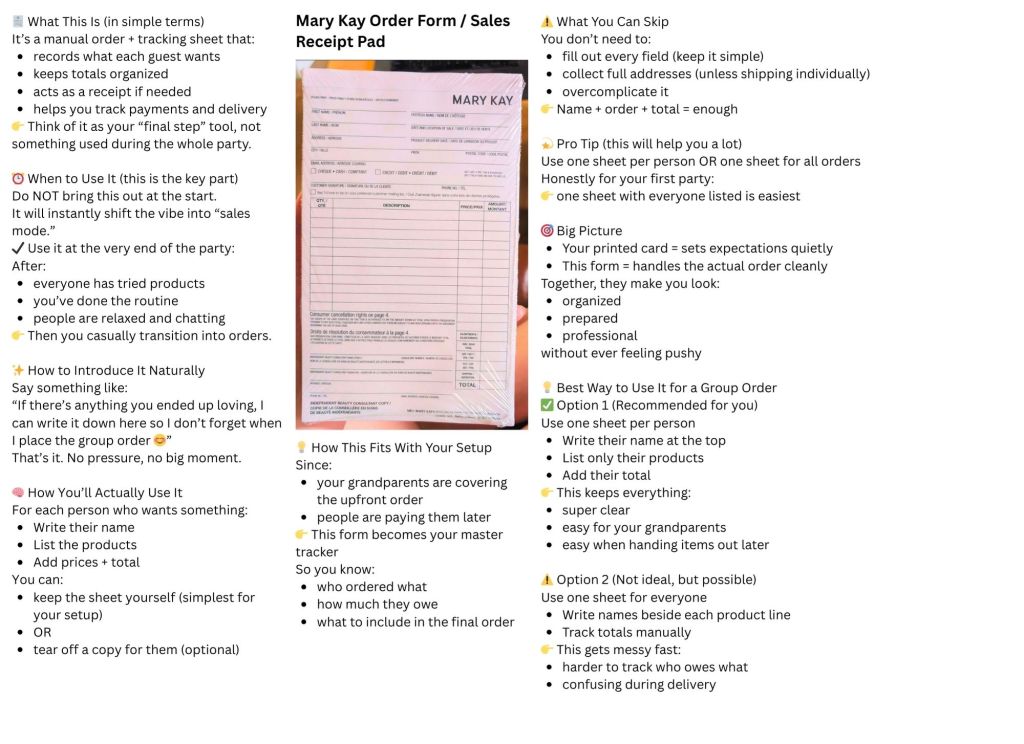
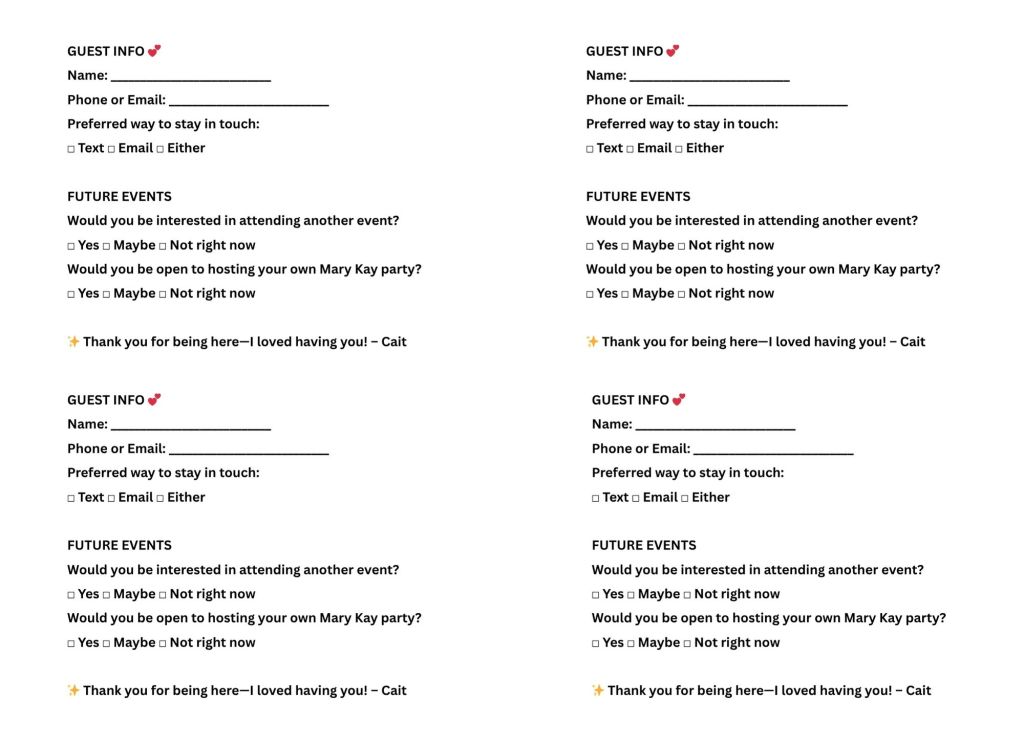
Feedback Forms & Ordering Systems
Supporting materials designed to improve organization, simplify ordering processes, and create smoother user experiences before, during, and after events.
The Strategy & Process:
The strategy for this project focused on transforming personal learning into educational design systems that could help both myself and others better understand makeup, skincare, and product application. Rather than approaching beauty education as product promotion, I treated the process as an ongoing design challenge—researching unfamiliar topics, simplifying information, testing materials in real experiences, and refining designs based on clarity, usability, and engagement. The work evolved through several phases that supported both confidence building and long-term growth in instructional design, event planning, and visual communication.
1. Research & Learning
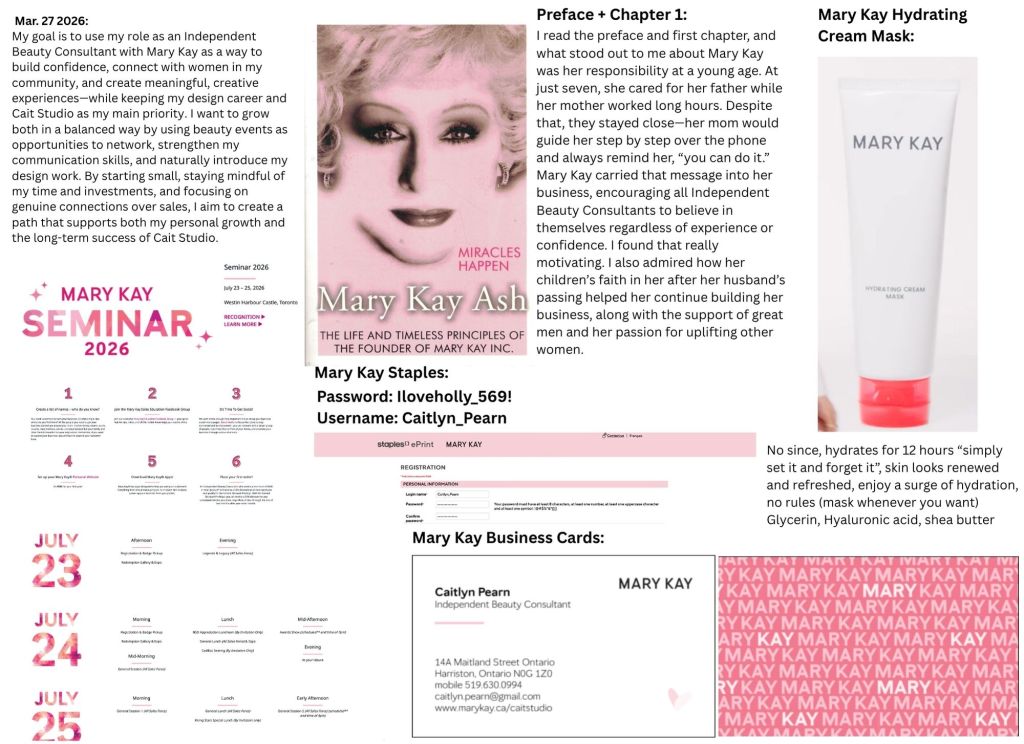
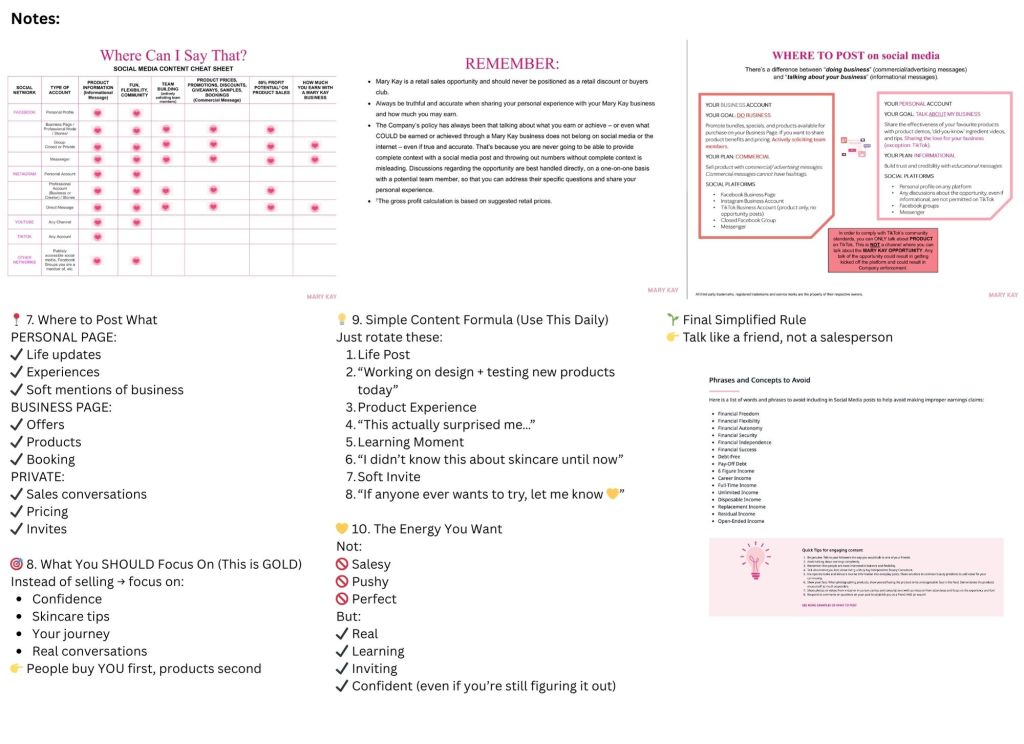
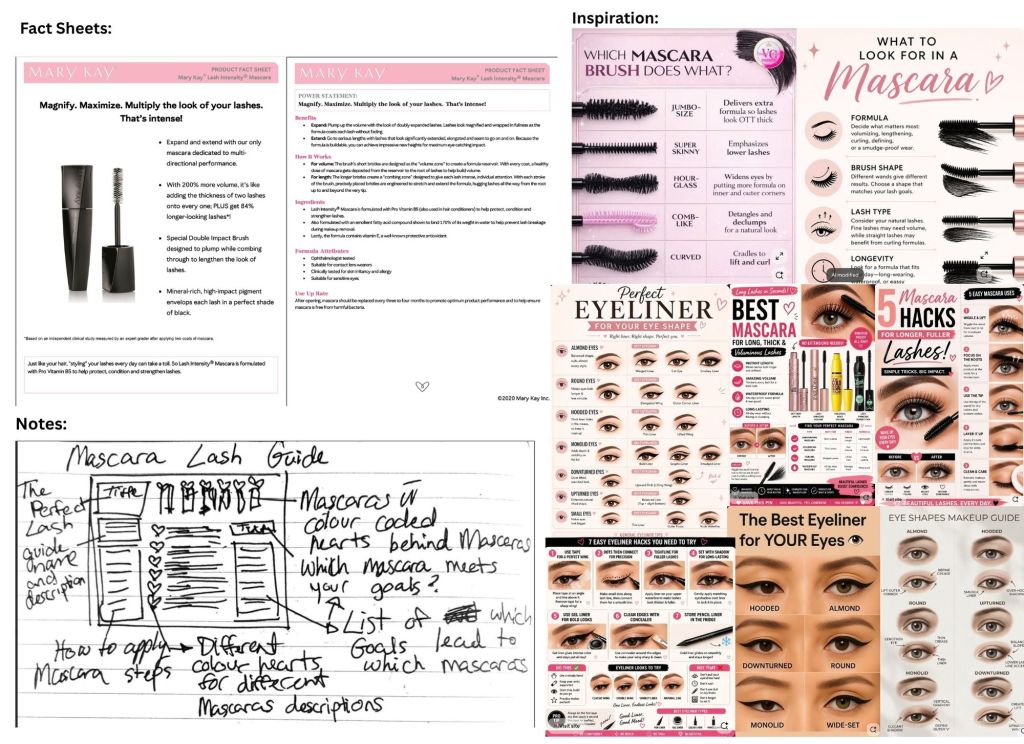
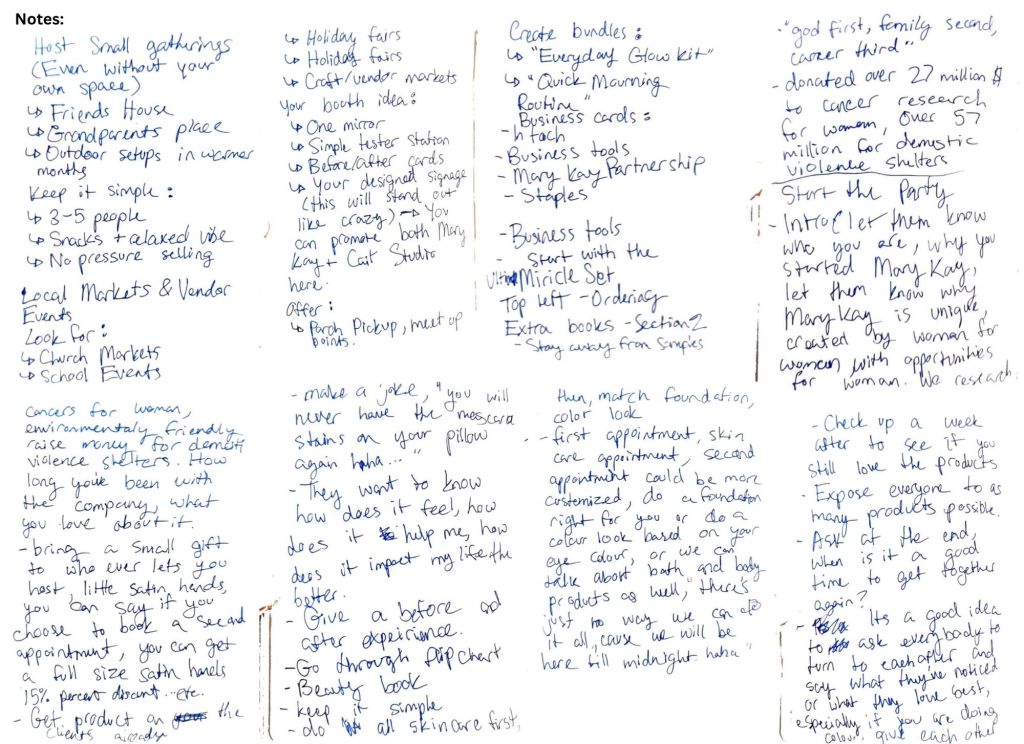
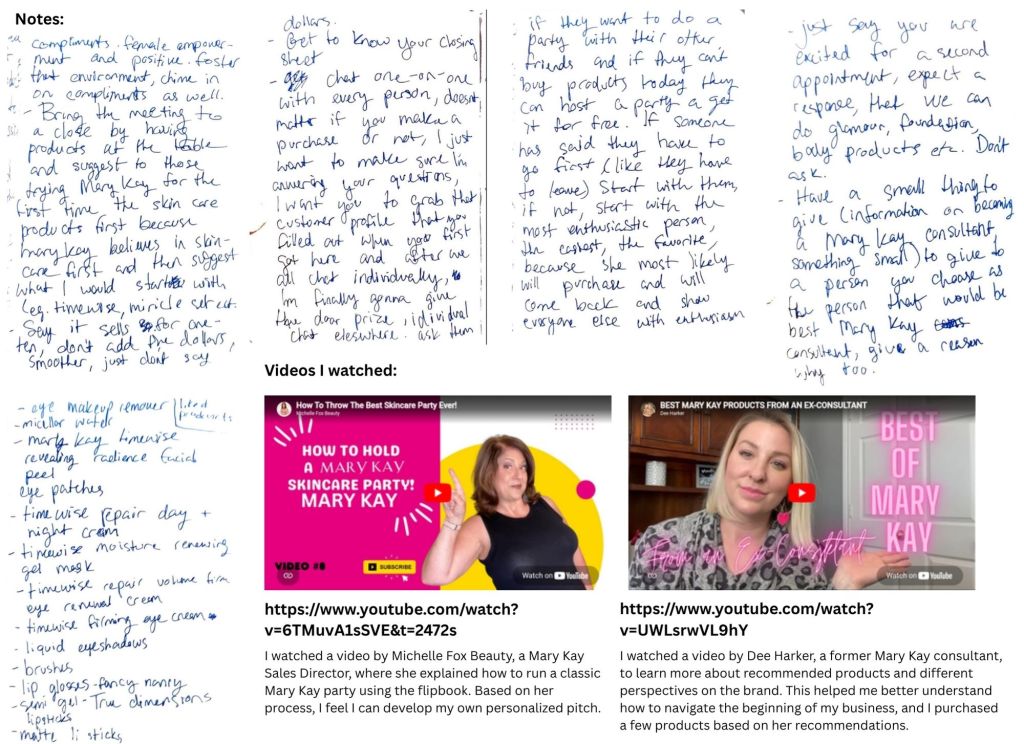
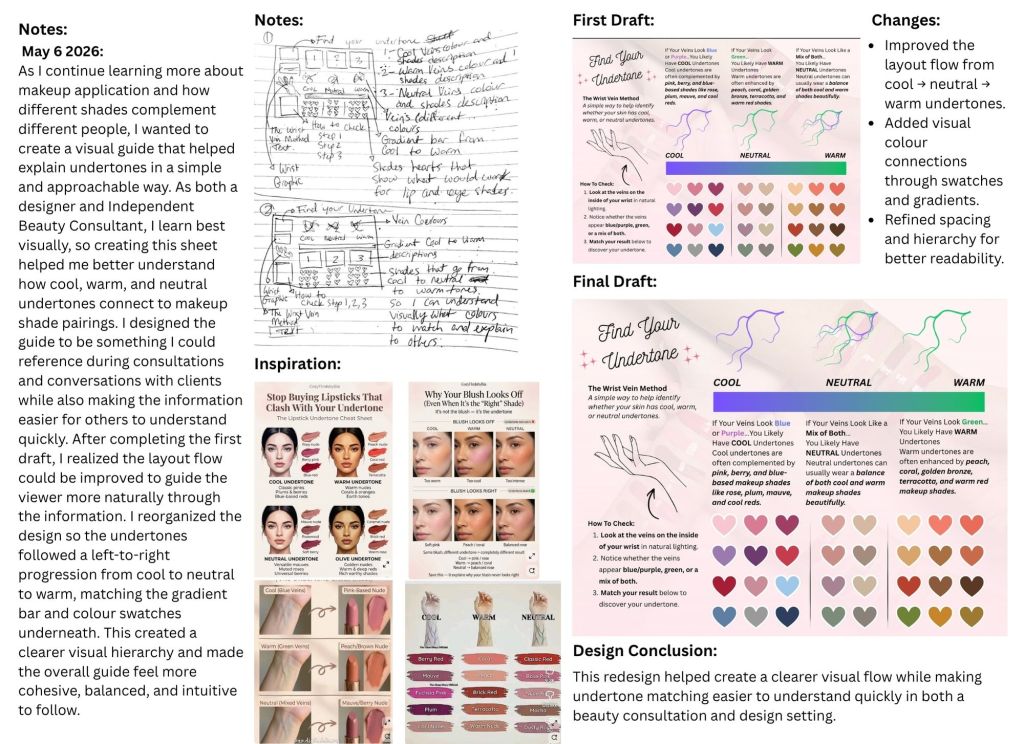
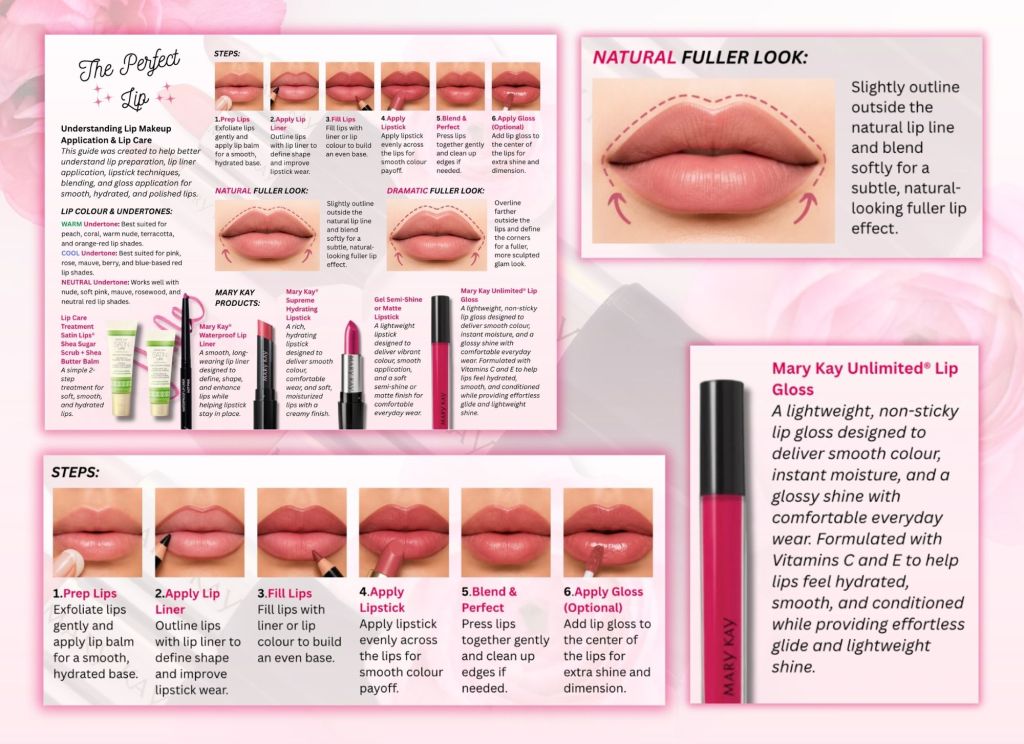
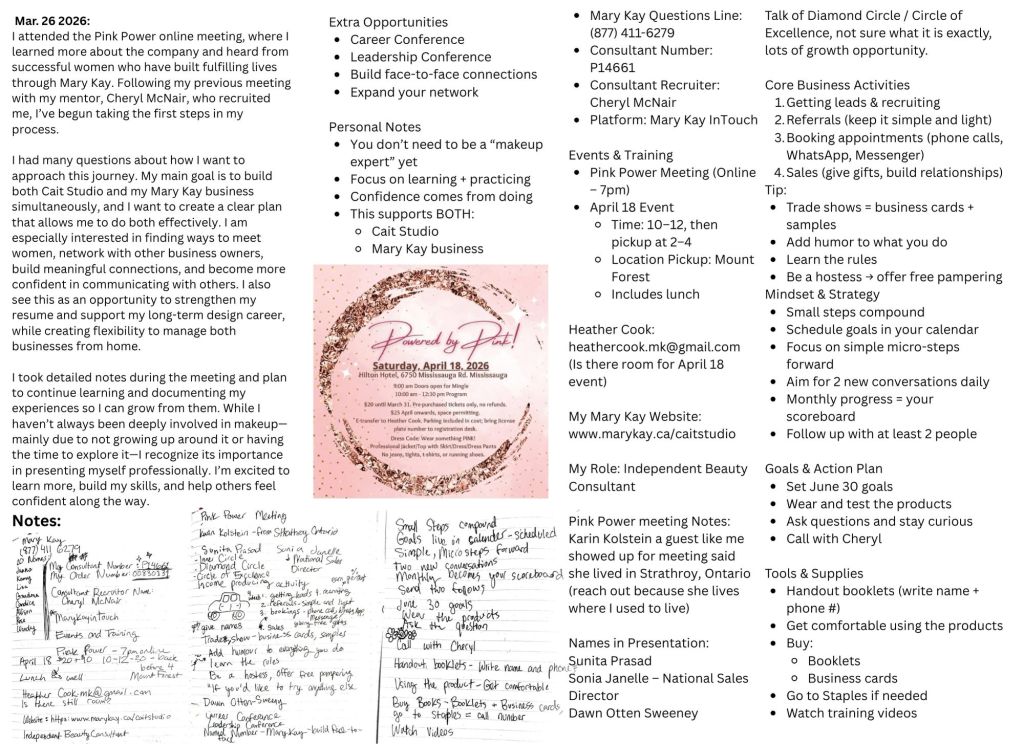
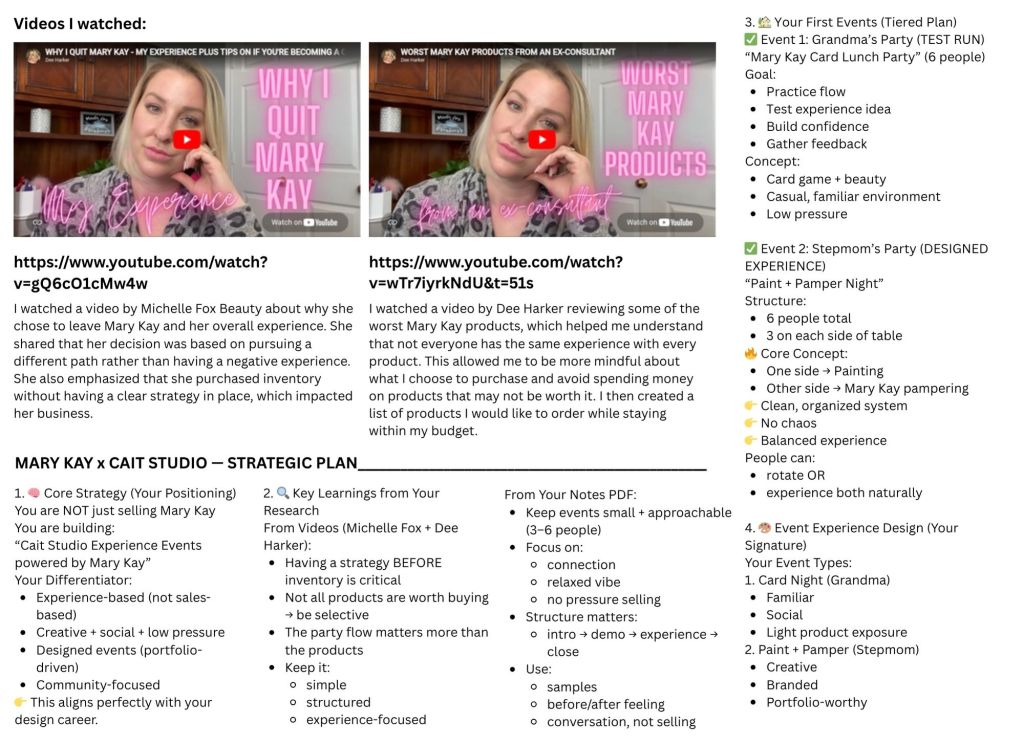
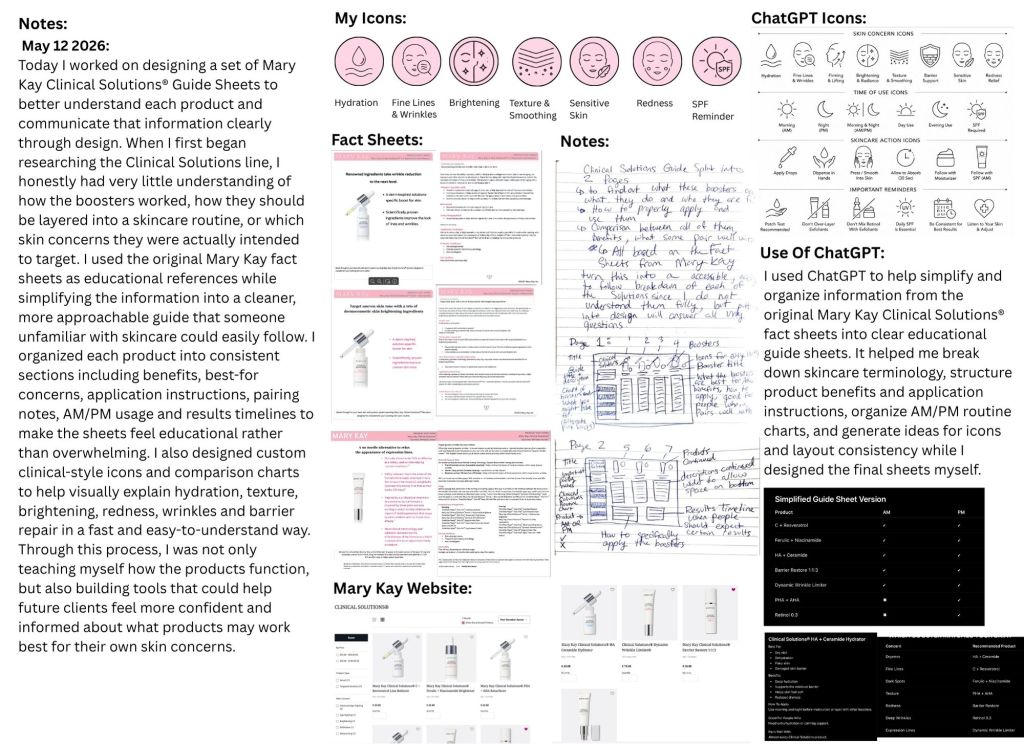
I began by researching skincare routines, makeup application techniques, product ingredients, undertones, and Mary Kay educational materials to better understand concepts I had little previous experience with. I attended seminars, watched training videos, reviewed fact sheets, and documented notes to build foundational knowledge before designing educational resources.
2. Information Simplification & Educational Design
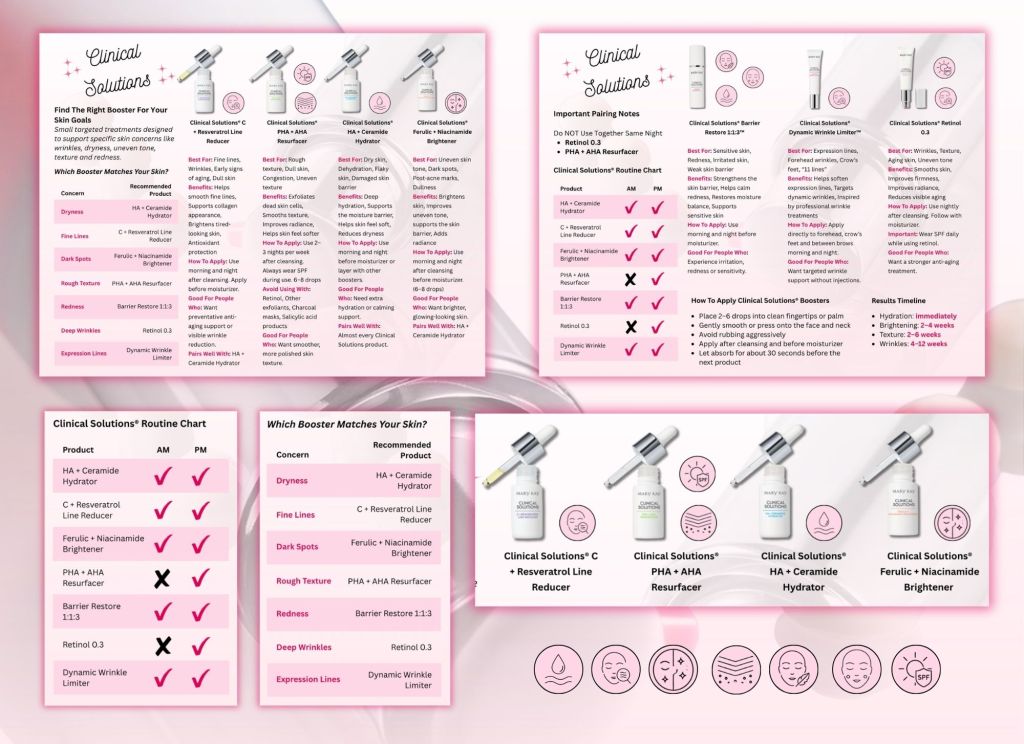
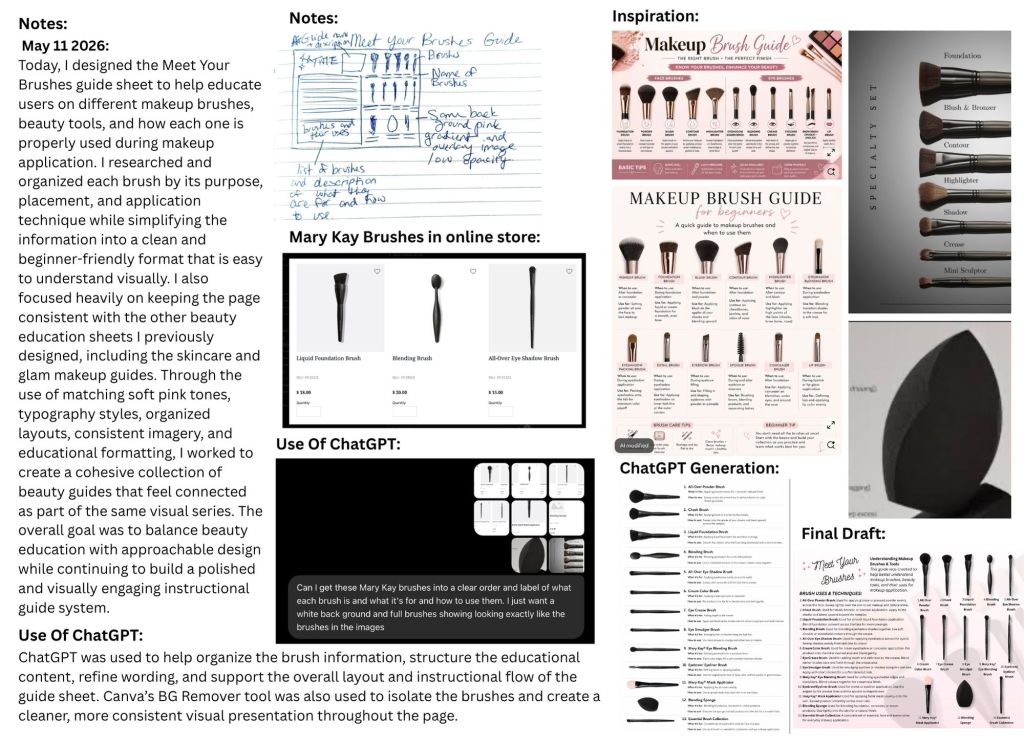
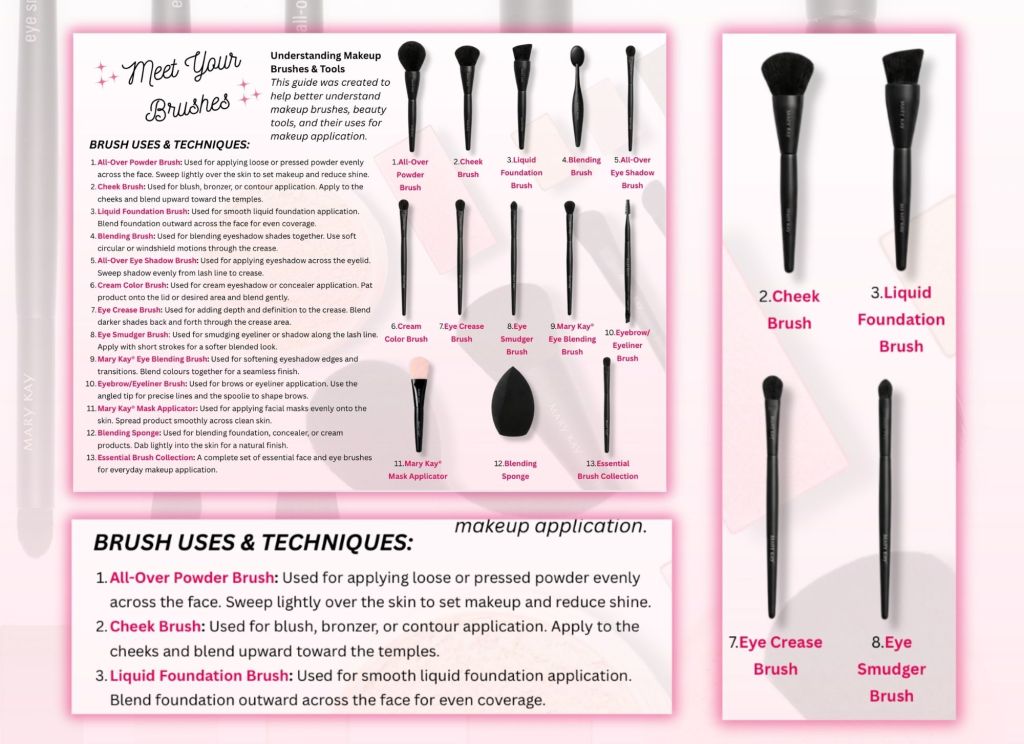
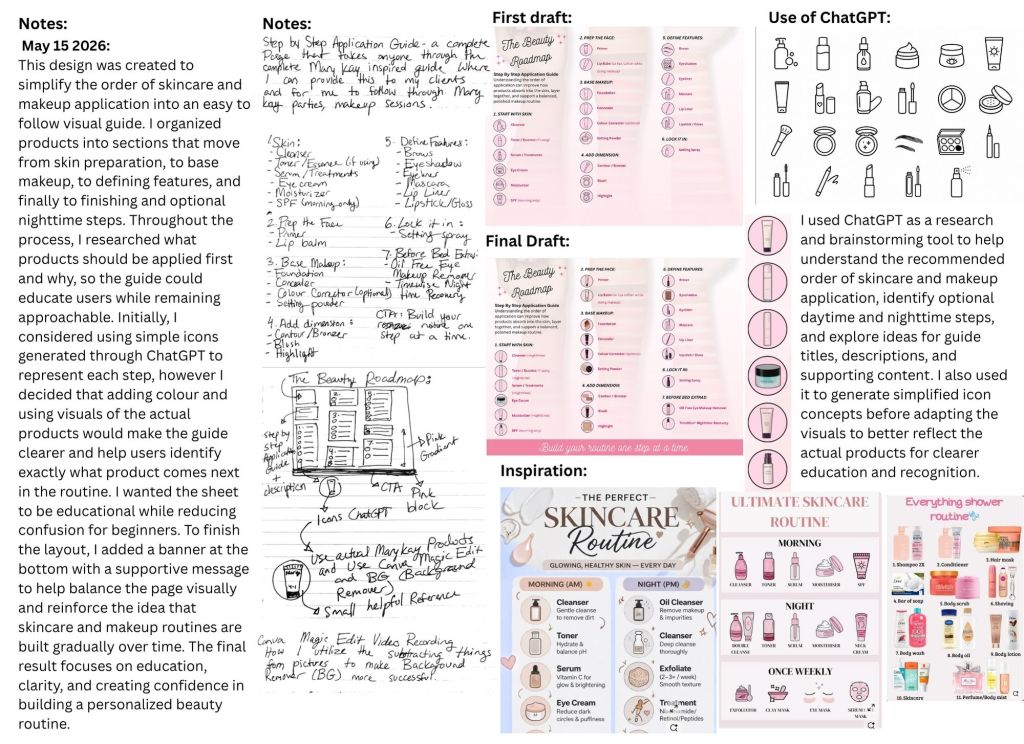
Once information was gathered, I translated complex beauty terminology and product instructions into beginner-friendly visual systems. I developed instructional guides, routine sheets, comparison charts, icons, and application layouts designed to reduce confusion and make learning more approachable through clear hierarchy and organization.
3. Visual System Development & Consistency
As the collection grew, I focused on creating consistency across all materials through repeated colour systems, typography, icon styles, layouts, and educational structures. This allowed separate guides and event materials to function as part of one cohesive experience while strengthening visual recognition and usability.
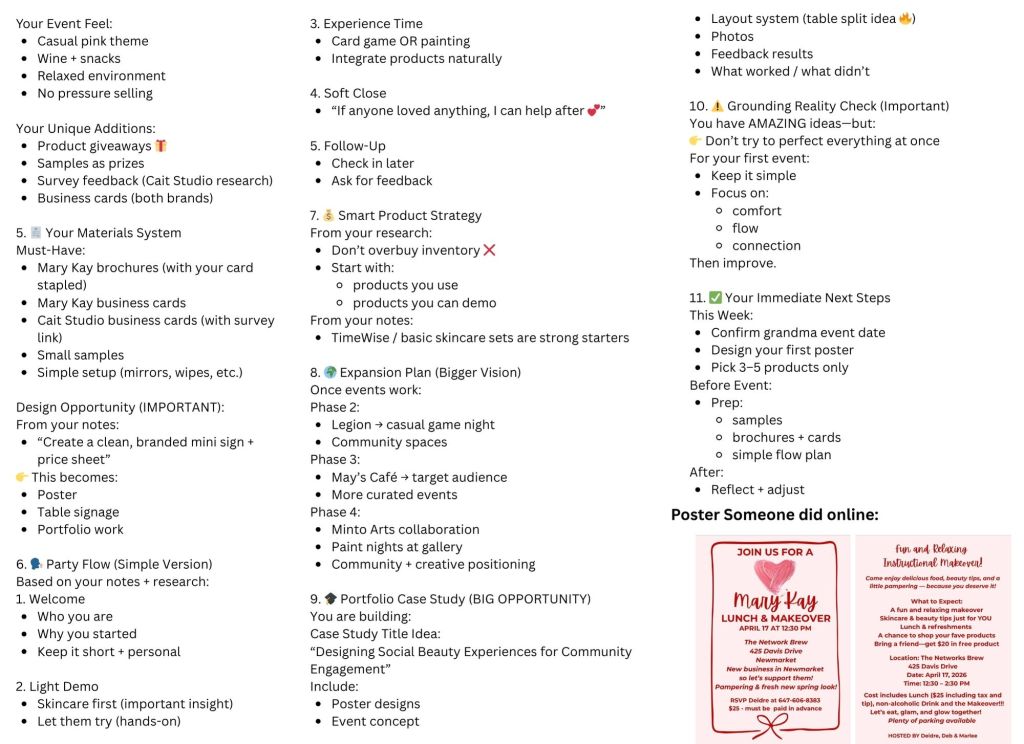
4. Experience & Event Design
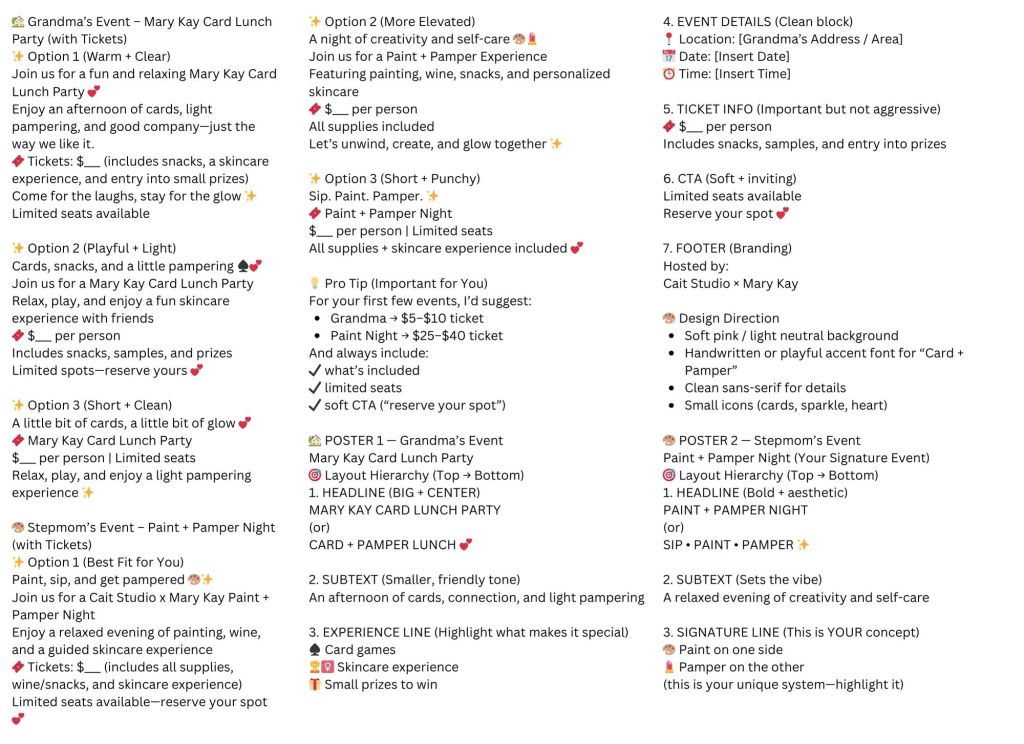
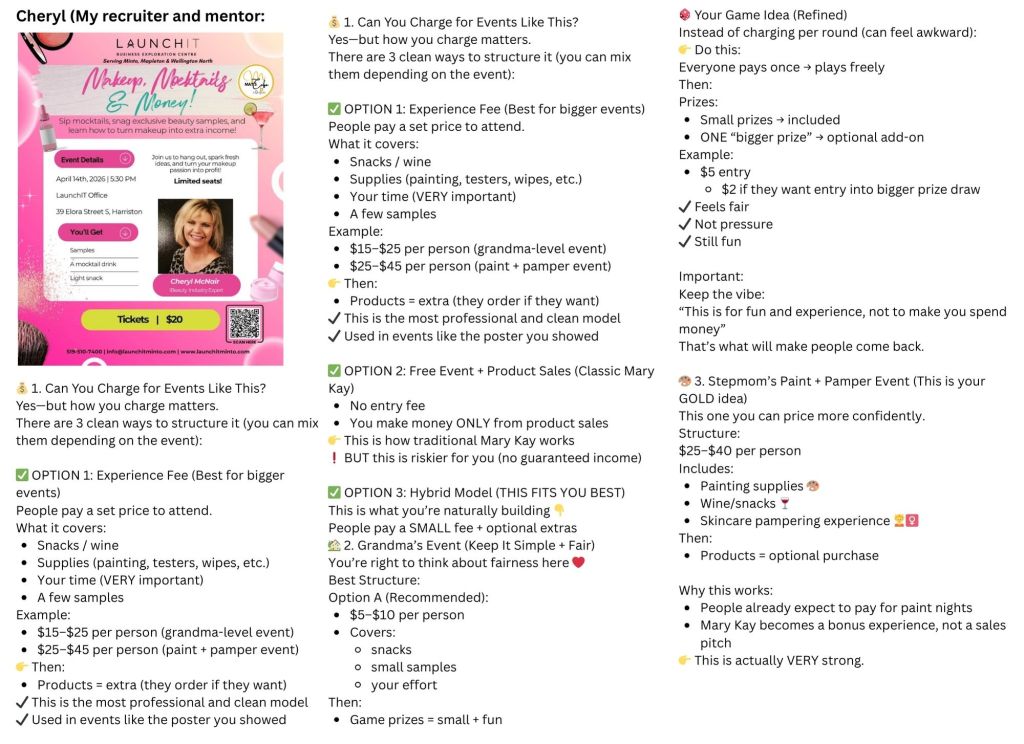
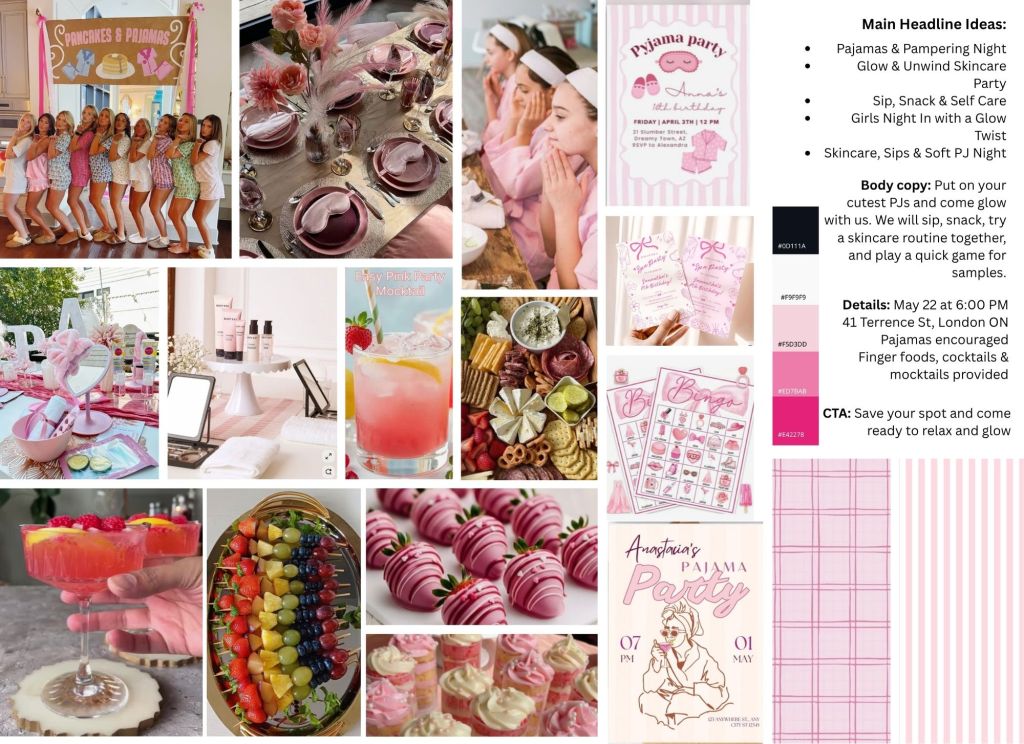
Beyond educational sheets, I explored how design could improve real-life interactions through party planning, feedback forms, promotional materials, agendas, bingo activities, ordering systems, and themed events. The goal was creating low-pressure experiences centered around learning, confidence, and community rather than direct selling.
5. Testing, Reflection & Iteration
Materials were tested through actual events, consultations, and feedback. I continuously adjusted layouts, hierarchy, spacing, wording, and educational flow to improve clarity and engagement. This ongoing process of reflection and refinement became one of the most valuable parts of the project, helping strengthen both my design approach and confidence communicating with others.
6. Ongoing Growth
This project continues to evolve as I learn more about beauty education, event experiences, and instructional design. What began as teaching myself makeup and skincare has expanded into an ongoing exploration of educational systems, community experiences, and user-focused design.
Iteration & Refinement:
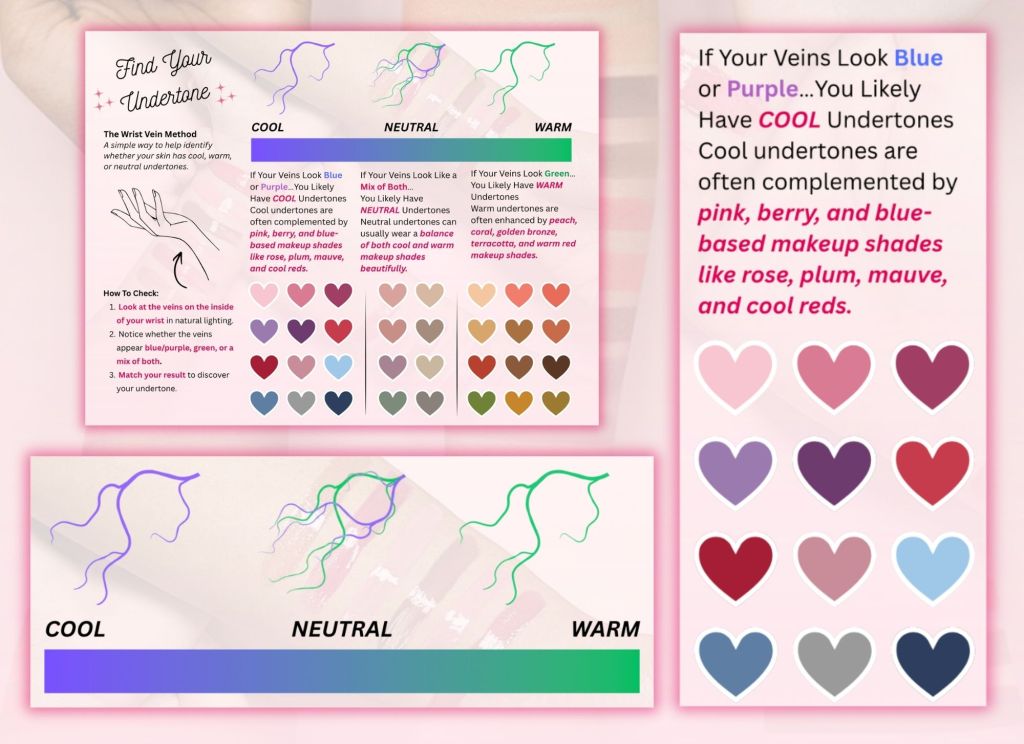
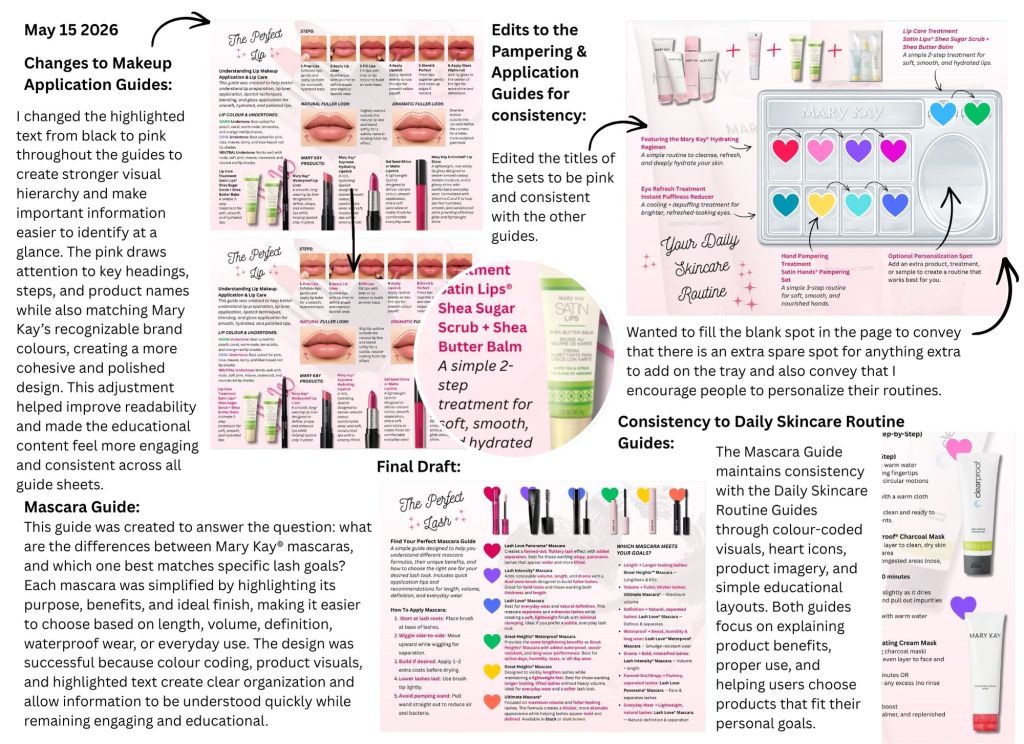
Throughout the project, I continuously adjusted designs based on clarity, readability, and overall user experience. Small changes such as increasing contrast, refining spacing, reorganizing layouts, improving hierarchy, and simplifying information often had a significant impact on how materials functioned. Revisiting and refining work became an important part of the process and strengthened my understanding of thoughtful, user-focused design.
Event Testing & Real Application:
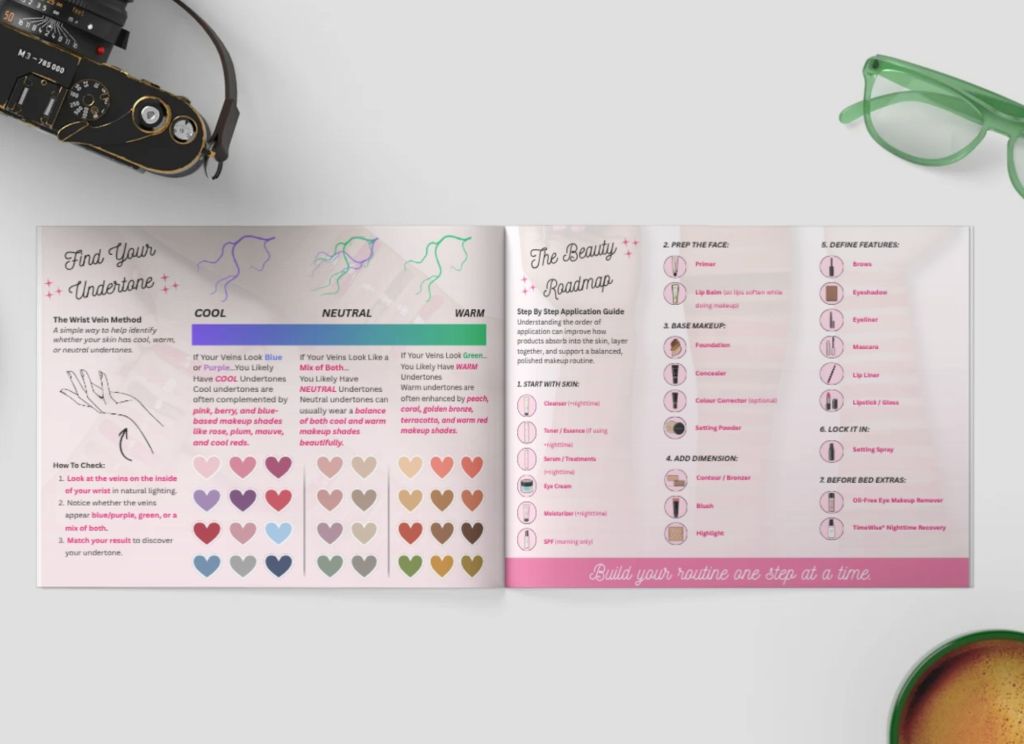
Many of the educational materials created throughout this project were tested in real event settings including skincare parties, consultations, and community-based experiences. This allowed me to observe how people interacted with guides, what questions commonly arose, and which materials supported engagement most effectively. Testing designs in real environments provided valuable feedback while helping build confidence in both communication and event planning.
Consistency Across Projects:
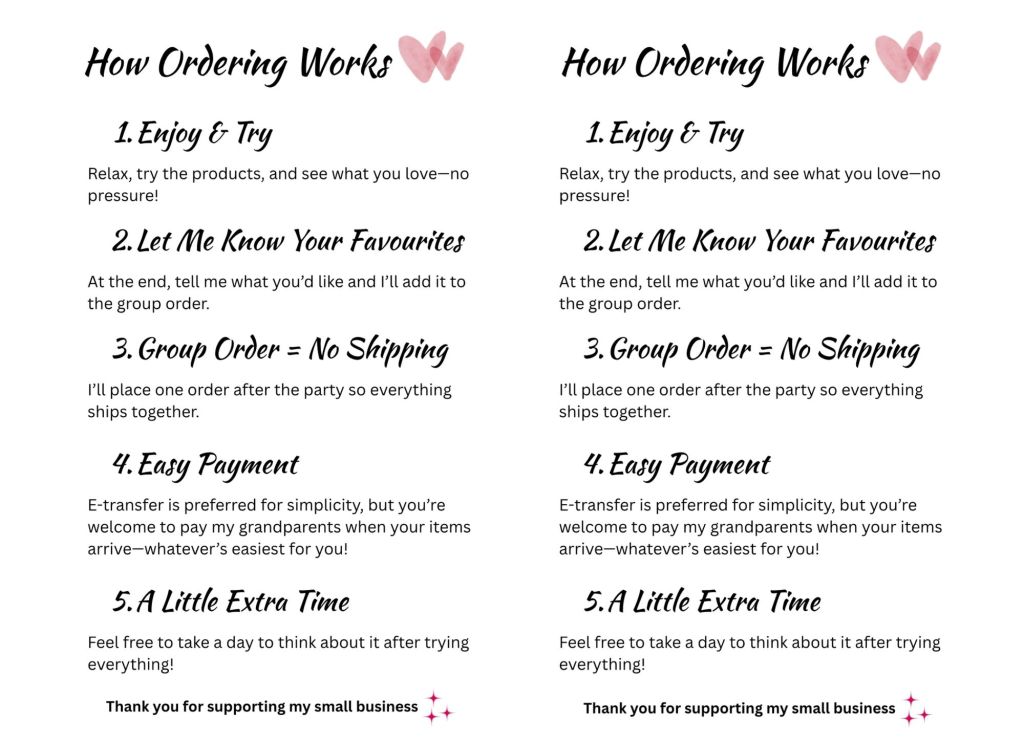
As the collection of educational guides, promotional materials, event designs, and supporting resources expanded, maintaining consistency became an important part of the overall design strategy. Repeated use of soft pink colour palettes, typography styles, instructional layouts, icons, product imagery, and visual hierarchy helped create a cohesive system across all materials. Educational structures such as colour coding, simplified step-by-step organization, and beginner-friendly formatting were carried throughout multiple projects to improve recognition, readability, and usability. This consistency allowed individual pieces to function independently while contributing to a larger visual identity that reflects both Mary Kay branding requirements and my own Cait Studio design approach.
Visual Language:
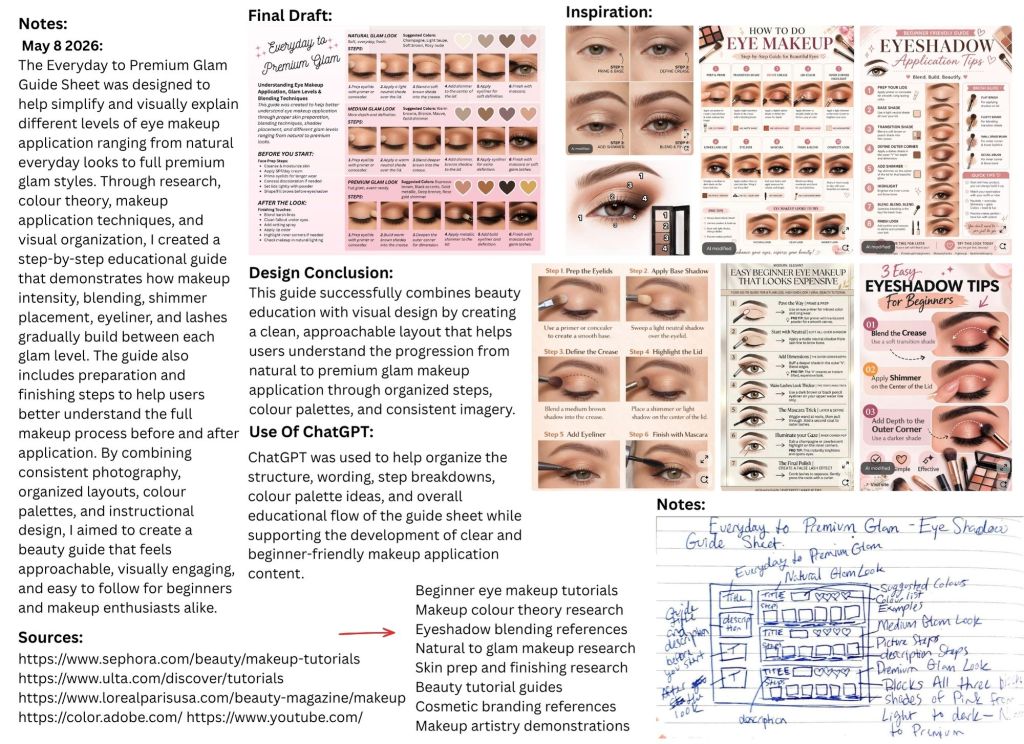
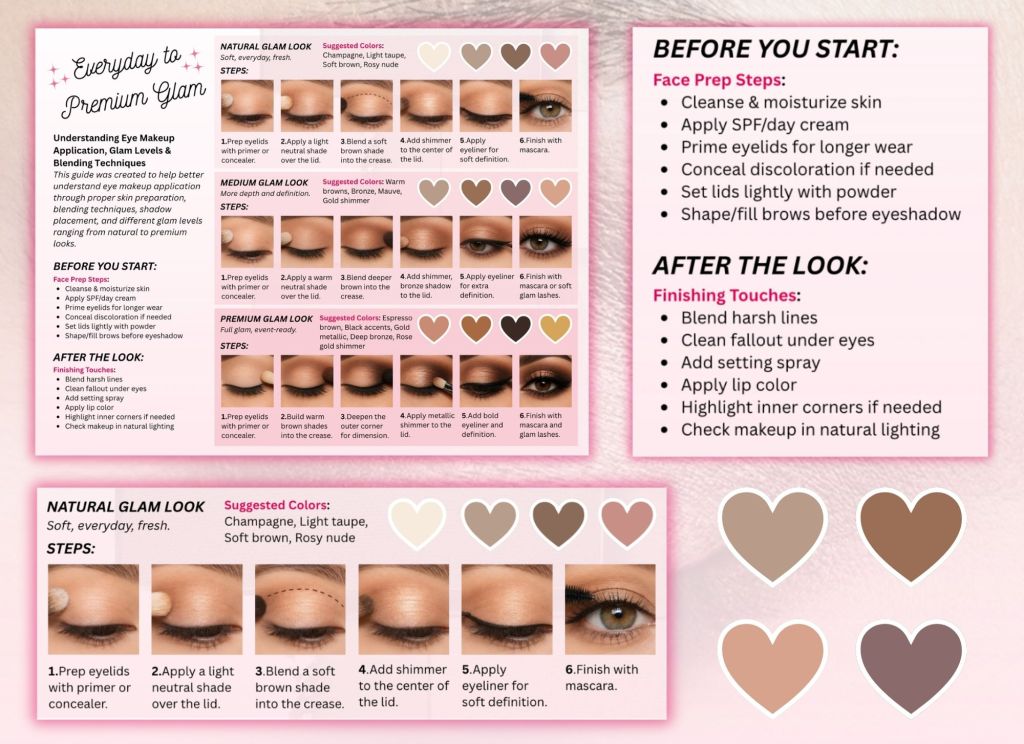
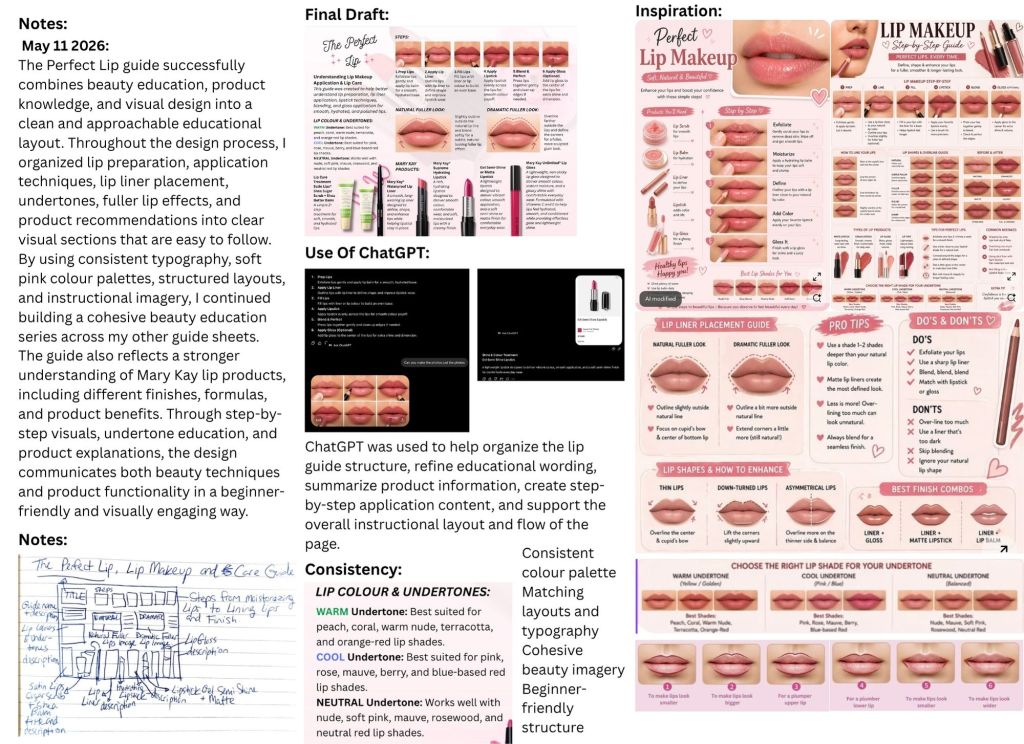
Throughout this project, I developed a consistent visual language designed to make beauty education feel more approachable, engaging, and easier to understand. Soft pink colour palettes, repeated typography styles, instructional icons, colour coding, product imagery, and simplified layouts were used across guides, event materials, and promotional pieces to create familiarity and cohesion. Visual elements were intentionally chosen to reduce overwhelm while supporting clarity, helping users quickly recognize important information, follow routines, and navigate educational content with confidence. Over time, this visual language became a recognizable system that balanced Mary Kay brand requirements with my own Cait Studio approach to educational and experience-focused design.
Tools & Methods:
A combination of design, research, educational resources, and planning tools were used throughout this project to support learning, develop instructional materials, and create engaging event experiences. These tools helped transform unfamiliar beauty concepts into approachable educational systems while supporting consistency across guides, campaigns, and event materials.
Tools:
- Canva – creating layouts, educational guides, promotional materials, event graphics, and template systems
- ChatGPT – organizing research, refining educational content, simplifying terminology, and supporting instructional flow
- Mary Kay Fact Sheets & Product Resources – researching ingredients, routines, application techniques, and product information
- Training Videos & Seminars – expanding knowledge through consultant education, events, and beauty demonstrations
- Pinterest – gathering inspiration for layouts, campaigns, events, and educational graphics
- Hand Sketching & Notes – planning layouts, testing ideas, and documenting learning throughout the process
Methods:
- Research-based learning – building foundational knowledge before creating educational materials
- Instructional design approach – simplifying complex information into beginner-friendly visual systems
- Iterative design process – refining layouts through testing, feedback, and repeated adjustments
- Consistency systems – maintaining repeated colours, typography, hierarchy, and visual language across projects
- Experience-focused design – prioritizing engagement, comfort, and interaction over traditional selling methods
- Real-world testing – applying guides and materials during events to evaluate usability and improve outcomes
- User-focused communication – designing resources intended to reduce overwhelm and improve confidence for beginners
Key Learnings:
Throughout this project, I learned that educational design becomes more effective when complex information is simplified into approachable, visually organized systems. Research, testing, and repeated refinement proved just as important as the final designs themselves, especially when creating materials for topics I was simultaneously learning. I also discovered the value of consistency across guides and event materials, helping improve clarity, recognition, and overall user experience. Beyond design skills, this project strengthened my confidence communicating with others, planning experiences, leading small events, and using real-world feedback to improve future work. Most importantly, I learned that design can make unfamiliar subjects feel less overwhelming and create more comfortable, engaging ways for people to learn.
Results:
What began as a personal effort to better understand makeup, skincare, and product application evolved into an ongoing collection of educational systems, event materials, and experience-focused designs. Throughout the process, I developed multiple instructional guides, promotional campaigns, event resources, and supporting materials that were tested in real settings through skincare parties and consultations. These projects helped improve engagement, create more organized event experiences, and increase confidence in communicating information to others. Beyond the final designs, the experience strengthened my skills in research, instructional design, art direction, event planning, and creating user-focused systems that make complex information feel more approachable and easier to understand.
What I’d Do Next:
As this project continues to evolve, I would focus on expanding educational materials, testing more event concepts, and gathering structured feedback to better understand how people interact with the guides and experiences. I would also continue refining consistency across all materials while exploring larger community events, collaborations, and additional instructional systems beyond skincare and makeup. Moving forward, I see opportunities to strengthen measurable outcomes, improve accessibility within beauty education, and further develop this work as an exploration of instructional design, experience design, and community engagement.
Conclusion:
What began as a personal effort to better understand makeup, skincare, and product application gradually evolved into an ongoing exploration of educational design, event experiences, and user-focused communication. Through research, instructional guides, promotional materials, and real-world testing, this project became an opportunity to transform unfamiliar information into approachable systems designed to support confidence and learning. Beyond developing beauty education resources, the process strengthened my skills in research, art direction, instructional design, event planning, and creating cohesive visual systems. Most importantly, this experience showed me how thoughtful design can reduce overwhelm, encourage engagement, and create more meaningful experiences while continuing to support my growth as both a designer and communicator.
 Cait Studio